Showing posts with label US Politics. Show all posts

Monday, October 6, 2014

Commanders of the Faithful, Part 3


In Part 1 we began looking at how mosques are actually considered, by leaders in the Muslim world, not just as places of worship, but as centers of political and even military activity. In Part 2 we looked at money, and considered how it snakes its way in to the campaign coffers of political leaders, seeing in particular how Barack Obama and George W. Bush had both received financial support from the Middle East. Towards the end of the post, I wrote:

Once these guys start laundering money to a campaign, there are all kinds of ways to do it. Some foreign billionaire sends a few million to some associates in the US. That money goes to US citizens. Those citizens then have a list of campaigns, PACs and other entities to donate to; these PACs and entities know who they have to pass the money on to, or how it has to get spent. Sometimes, these middlemen keep a small cut for channeling the money.

A little farther on, near the end, we finished with one quote and added a little analysis:

After years of practice, and using methods pioneered by Islamic terrorist groups, they are very, very good at making money vanish.

Notice the last author's comments, about how the left uses the same methods to finance elections that Islamic terrorist groups use to finance holy terror.

We now begin to consider foreign influence coming from another direction, and moving to another destination. Specifically, we look at how foreign powers which, though our allies, have connections that are questionable (to say the least), and how they generate support in Washington.

__________


You may recall the unrest in Egypt in recent years. As part of the "Arab Spring", long-time ruler of Egypt, Hosni Mubarak, resigned, and during elections supervised by the military, Mohamed Morsi was elected to replace him in June, 2012. By November, Morsi, who had been a leading member of the Muslim Brotherhood until his resignation from that organization upon assuming the presidency, established himself as essentially a dictator, granting himself unlimited powers to protect Egypt.

By June 30, 2013, the first anniversary of Morsi's election, Morsi was quite unpopular, and protests erupted demanding his resignation. The military intervened on behalf of the protesters, and in early July Morsi was forced out.

So, for about one year, from the end of June, 2012, until the beginning of July, 2013, Morsi was president of Egypt, and for much of that time ruled basically as a dictator.

It was during this time that an important vote came up in the Senate regarding a legislative amendment that would stop the sale of F-16 fighter aircraft and M1 tanks to Egypt. The amendment was defeated, meaning the sale and delivery could go forward.

In January, 2013, with Morsi - who had been a leading figure in the Muslim Brotherhood until he resigned to become president of Egypt - still firmly ruling Egypt with near-dictatorial powers, Kentucky Senator Rand Paul was speaking in the Senate in favor of the amendment that he had introduced to stop the arms transfer. From US Senate Shoots Down Bid to Halt Sales of F-16s, Tanks to Egypt, January 31, 2013:

(CNSNews.com) – The U.S. Senate Thursday defeated an amendment that aimed to prevent the Obama administration from transferring F-16 fighter aircraft and Abrams tanks to an Egypt in disarray.

A vote to block the measure proposed by Sen. Rand Paul (R-Ky.) – an amendment to the debt limit bill – passed by a 79–19 vote.

In a strongly worded floor statement, Paul questioned the wisdom of providing the sophisticated weaponry at a time when "many see Egypt descending into chaos."

He based his argument on the Egyptian government's conduct, President Mohammed Morsi's expressed radical views, and the possibility that the weapons could be used in a future conflict against Israel.

Every Democrat in the Senate voted in favor of proceeding with the sale.

On the surface, the logic behind allowing the sale to proceed seemed to make some sense. Skipping down in US Senate Shoots Down Bid to Halt Sales of F-16s, Tanks to Egypt:

Rejecting Paul's amendment, Sen. Patrick Leahy (D-Vt.) characterized it as simplistic, short-sighted and potentially harmful to U.S. interests.

"Would that this amendment was as simple as the junior senator from Kentucky described it," he told senators after Paul had spoken. "His amendment would hinder our military assistance program, licenses for commercial sales of all major military equipment, including aircraft, ships, tanks, armor, parts and so on.

"It would mean a loss of thousands of American jobs. We'd incur more than two billion dollars in contract-termination penalties for U.S. taxpayers," Leahy said.

"But we'd also put at risk our access to the Suez Canal, the over flight by the U.S. Air Force over Egyptian territory, cooperation in the Sinai, Gaza, Syria, our emphasis and our ability to keep the Israeli-Egyptian peace agreement going.

"Do I have problems with the way the Morsi government is going? Certainly," he said. "But removing our ability to be involved, with keeping that peace agreement and our ability to influence those – this is not the way to do it."

But, we were still looking at arming the military of a nation that borders Israel, one which the Muslim Brotherhood had just taken over, and one where a new Islamist constitution had just been passed in a referendum.

To be sure, in reviewing reports from that time frame, it is my distinct impression that the Egyptian military was actually a fairly strong ally of the United States. Ultimately, it was the Egyptian military the ousted Morsi, and replaced him with a leader that was far more... I hate to use the term "moderate", but he is a guy who does not support the Muslim Brotherhood.

Presumably, Senators had access to material, both classified offical information, and unclassified information, including that available to the general public, which would allow their staffers to consider this; presumably, Senators looked not just at Morsi, but at the Egyptian military, its leaning, and its ability to influence internal Egyptian politics, before signing off on the sale.

However, I still have concerns about the Democrats in the Senate voting to ship sophisticated arms to the military of a nation that was at the time dictatorially ruled by a de facto leader of the Muslim Brotherhood.

How does a Senator really get influenced to go forward with such an arms sale? Obviously, there are many factors, but not the least of these is money from the country receiving the sophisticated arms.

__________


The Glover Park Group is a registered foreign agent of the Government of Egypt.


Their job includes supporting Egyptian government communications with the US government, the business community, non-governmental audiences and the media.


The Glover Park Group has an affiliated political action committee.


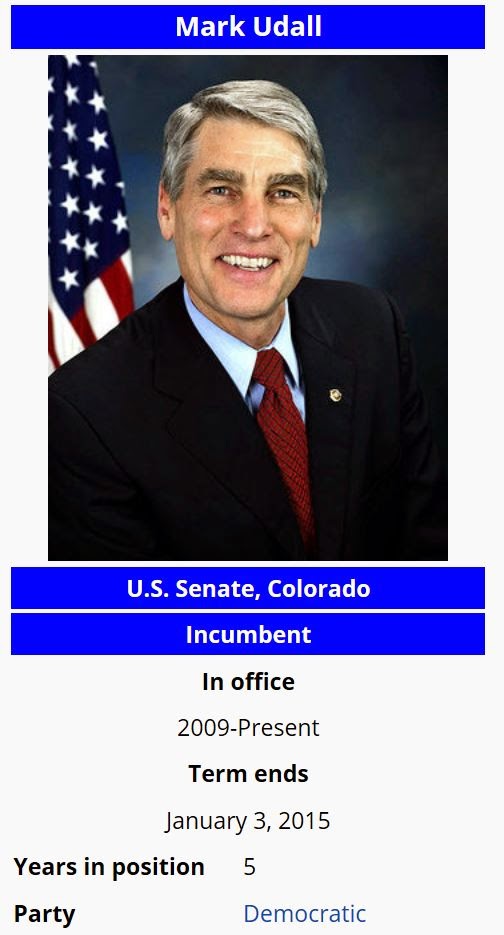
This political action committee gave $1500 to Senator Mark Udall (D - Colorado) in June, 2012, shortly after Morsi came to power in Egypt.


This same PAC also gave another $1000 to Senator Udall in March, 2013, after Udall had supported the sale of these high-tech weapons to Egypt.


Senator Mark Udall raises big money. Over half of his money is itemized individual contributions, but when one factors in smaller individual contributions, which do not have to be itemized, you realize nearly three-quarters of his money comes not from PACs, but from individuals.


However, in this cycle alone, he has raised over $2 million from PACs. It's not surprising he is listed in a July, 2013, article as among the top ten recipients of lobbyists' money.

Speaking of lobbyist money in Mark Udall's campaign coffers, Senator Udall has also received $2000 from JSTREETPAC, a PAC associated with J Street, an organization which supports dialogue over confrontation and diplomatic solutions over military solutions, especially in regards to Israel and the Middle East.


While I personally agree that diplomacy and dialogue are favorable to war, it is my opinion that if Israel were to unilaterally commit exclusively to diplomacy and dialogue, the Islamic Arab states that surround Israel would overrun and destroy that nation quite quickly, as they have so often tried to do in the past.

I find it interesting that JSTREETPAC, which supports dialogue and diplomacy, gave money to a Senator who voted to send sophisticated weapons to Egypt when Egypt was controlled by the Muslim Brotherhood, and when the Muslim Brotherhood was pushing through a draft of an Islamist constitution.


By order of the Prophet (peace be upon him), stay tuned for more!

Saturday, September 27, 2014

Mary Landrieu and Democrat Clout

Republican Bill Cassidy is leaving Louisiana's 6th Congressional District seat to run against incumbent Democrat Senator Mary Landrieu.

This leaves LA CD 6 as an open seat; also, this means that there are a total of five Democrats, including incumbent Senator Landrieu, three Republicans, including Congressman Cassidy, and one Libertarian running for the US Senate seat from Louisiana in 2014.

In 2012, Republican Bill Cassidy won LA CD 6 with 79.4% of the vote; no Democrat was in the race. In 2010, incumbent Cassidy won with nearly two-thirds of the vote against Democrat Merritt E. McDonald, Sr., who had just over one third of the vote. In the past several elections, this district showed solid support for the Republican Party. We can project that this district is safe for the Republicans.

However, in 2014 there is a Democrat challenger: Edwin Edwards. Edwards, 87, is a former governor of Louisiana, the longest-serving state governor in post-Reconstruction America, and a former Congressman. Accused of corruption, ties to organized crime, receiving illegally-donated campaign money, and other crimes, Edwards was finally sent to prison in 2002, convicted of a variety of charges, including racketeering, extortion and money laundering.

While in prison, Edwards divorced his second wife, then met a woman 51 years younger than he is; the two were married six months after Edwards' release from prison in 2011. The story of Edwards' marriage to his young wife Trina is the subject of a reality show, The Governor's Wife.

In light of this background, it is interesting that Louisiana Democrat Mary Landrieu has skipped endorsing Edwards for the LA CD 6 race. Landrieu's dodge of endorsing Edwards as well as her dodge of explaining why she would not endorse him have played well with at least some in Louisiana.

Louisiana Democrat Senator Mary Landrieu
Official US Senate Photo

The question that comes to mind is: Why? Why would she not endorse him?

Louisiana uses a non-partisan blanket primary system which, ironically, was adopted in 1975 by then-governor Edwards. The Louisiana primary election is thus on November 4; if no candidate receives more than 50% of the vote, then the top two candidates will compete in the general run-off election on December 6.

With two other Democrats running in the 6 CD race this year, the Democratic State Central Committee of Louisiana has already endorsed Edwards, as well as Landrieu herself. (I can understand endorsing an incumbent Senator against challengers, but I wonder how the other two Democrat candidates in the Congressional race must feel about being sidelined so the Democrats can give the ball to a convicted criminal.)


In fact, the matter has received media attention including a published list of Louisiana Democrat Central Committee members who may have been involved in endorsing a convicted criminal for Congress, along with some analysis as to why this might be happening and how it might impact the Senate race:

They know Edwards can't win, and there are other Democrats in the race. They have perfectly legitimate "outs" here; it's not necessary to endorse Edwin Edwards and bring upon themselves the shame and ridicule inherent in such a decision. They're doing it because they think Edwards can turn out the black vote in the 6th District and thus help Mary Landrieu in December. Plain and simple; they think Edwards can do it, and the Democrats in the race who are not coming off a stretch in federal prison on public corruption charges – Peter Williams and Richard Lieberman, by name – can't.

So they'll endorse a criminal in order to keep one of their candidates viable for another office. That he's a criminal doesn't bother them in the least. Wonder why that is.

We saw how Democrats governed this state for 100 years, and rampant criminality was the norm. And they're still endorsing criminals. Maybe somebody can explain how this endorsement is legitimate politics and not at the very least a looking of the other way at public corruption, but we doubt it.

If there are any Democrats in this state who don't support criminal conduct in public office, they ought to make a run at Peterson's chairmanship of the Louisiana Democrat Party. Until that time, we're going to call that a criminal syndicate disguised as a political party.

Why does Senator Landrieu not follow suit with the Louisiana Democratic Party, the organization that endorsed her, and endorse Edwards? Especially considering the suggestion that the whole reason Edwards was endorsed in a race he is believed to not be able to win is to get out the vote to support Landrieu so the Democrats can retain her in her seat in the US Senate?

__________


Just as CD 6 seems to be quite safe for Republicans, some information suggests the entire state is leaning more toward Republicans. For example, Louisiana currently has 5 of 6 Congressmen, 1 of 2 Senators, and 7 of 7 statewide elected officeholders from the GOP; in statewide and Congressional offices, Democrats face a near shut-out. Additionally, the Louisiana Family Forum is said to report that the Louisiana legislature has over the past decade begun to vote much more conservatively on family and life issues, suggesting a trend that could work toward Republican advantage this year.

Additionally, the history of Senator Landrieu's elections sends mixed signals as far as predicting the outcome of her bid for re-election. In Louisiana's 2008 election for the US Senate, Landrieu took just over 52% of the vote in November, allowing her to win re-election without a run-off.

However, in 2002 Landrieu took 46% in the open primary, with Republican challenger Suzanne Haik Terrell coming in second with just over 27%. Landrieu then won re-election in the run-off, taking just under 52% of the vote.

What is very interesting, though, is the controversy surrounding Landrieu's first election to the US Senate, which happened in 1996. Initially, Republican Woody Jenkins took over 26% of the vote, with Landrieu taking just over 21% in the primary. This sent these two to the run-off election, where exit polls showed Jenkins ahead of Landrieu 51% to 49%. However, a late surge in Democrat stronghold New Orleans left Landrieu taking New Orleans by 100,000 votes, placing her just barely over the top statewide, with a 5788-vote margin; outside New Orleans, Jenkins had 53% of the vote.

Jenkins appealed the matter to the Senate Rules Committee, asking the Senate not to seat Landrieu, charging that her election was won fraudulently. It should be noted that 1996 was also the year Bill Clinton won re-election, and that the Senate was controlled by Republicans since the 1994 election. After a stormy 10-month investigation, the Senate let the election results stand.

More recent analysis shows that Senator Landrieu's hold on much of Louisiana may be less tenuous, but that it may also have peaked.

In this light, Senator Landrieu may be making a statement about former governor Edwards, but she may also be simply distancing herself from a convicted dirty politician whose own campaign will benefit hers by turning out voters in a race where literally every vote is expected to count: she needs the votes Edwards may bring to the polls, but can't afford to lose the votes of those who support her but not Edwards.

__________


Scandals - however pertinent or not - seem to be a significant backdrop to this race.

For example, one scandal which seems to be getting some traction centers around Senator Landrieu's use of officially-funded transportation for campaign- and fundraising-related activities. Known in some circles as "Chartergate", the scandal has landed Senator Landrieu the nickname "Air Mary".

Apparently, Senator Landrieu racked up some $34,000 of questionable travel expenses since 2000. In response, Landrieu has promised that her staff will conduct a thorough review of her travel expenses. Then, there have been cries that the review has not been done as fast as it should have.


More significant than the concern that 11% of her total travel expenses were improperly billed, however, is the growing picture of Landrieu as a Washington insider, not someone who represents the Republican-leaning state of Louisiana. From The Scandals Are Catching Up With Mary Landrieu by Scott McCay, September 16, 2014:

But the travel scandal is a giant piece of a building narrative of Landrieu as a privileged Washington insider out of touch with the people she purportedly represents. A web ad put together by Karl Rove's American Crossroads PAC hammered Landrieu for her D.C. attachments and $2.5 million Washington mansion last month, and with Chartergate back in full flower that narrative is taking hold.

The expensive mansion in the Washington area is only part of another scandal, this one dealing with Landrieu's residency. From Judge throws out suit challenging Mary Landrieu's residency by Julia O'Donoghue, September 5, 2014:

Baton Rouge state court judge Wilson Fields dismissed a lawsuit challenging U.S. Sen. Mary Landrieu's Louisiana residency Friday morning after hearing approximately 45 minutes of discussion on the case.

[snip]

Landrieu is Louisiana's only Democratic statewide elected official and considered one of the most vulnerable incumbents in the U.S. Congress up for reelection this fall. Her campaign has said attacks related to her Louisiana residency are political in nature and were never legally sound.

[snip]

Landrieu listed her parents house in New Orleans as her Louisiana domicile when she qualified to run for office earlier this month. The Senator, her eight siblings and mother own the New Orleans house together, though Landrieu also owns a home with her husband in Washington D.C.

One thing Senator Landrieu says she brings to the table as an incumbent who has now spent three terms in DC, something that a challenger would not bring to the table simply because that challenger is not a three-term incumbent, is "clout". From 16 questions for Mary Landrieu by Philip Rucker, May 27, 2014:

The Washington Post: What is your argument for a fourth term? Why should the voters of Louisiana keep you there? What is the case you're trying to make?

Sen. Mary Landrieu: "The voters over 18 years have established great clout in Washington. It doesn't belong to me; it belongs to them. As chair of the energy committee, they sit at the head of the table with the gavel. As chair of homeland security, the state sits at the head of the table with the gavel. It's not easy -- you can't just be awarded those gavels. It comes with time and it comes with persistence. So I think, you know, the state has clout that it should really think carefully about before giving up. It turns into jobs and opportunities and projects and funding that comes to the state.

However, the whole "clout" thing just plays into the theme of a privileged insider, one who may be out of touch with the people of the state that sent her to Washington to begin with. Back to The Scandals Are Catching Up With Mary Landrieu for its conclusion:

George Will once said that a good scandal merely reinforces what people already believe about its subject, and the Air Mary disclosures fit nicely with that truism. Landrieu, in fact, has touted her status as a powerful member of the D.C. elite as an asset to her voters through the years. Tepid media coverage to date aside, how ironic that Louisianans tailgating at LSU or gathering around office water-coolers should be discussing that very subject as proof in their minds she's been in Washington too long.

So, does Senator Landrieu represent Louisiana in the US Senate?

Or, does she represent the Democrats?

__________


Senator Mary Landrieu has been endorsed by the gun control crowd. The Hayride, a conservative Louisiana news source established in 2009, had this to say (September 23, 2014):

The same gun control advocacy group that has endorsed House Minority Leader Nancy Pelosi has also just endorsed Sen. Mary Landrieu (D-LA), citing her support for gun control.

Former New York Mayor Michael Bloomberg's "Gun Sense Voter" group endorsed Landrieu last night because she voted for the Manchin-Toomey gun control amendment back in 2013 that Bloomberg, himself, lobbied for.

Republican National Committee spokesman Ben Voelkel called Landrieu out-of-touch with the state, opting to vote with President Obama and Bloomberg on issues like gun control.

"Law abiding Louisianans deserve to have their Second Amendment rights protected, not attacked like Senator Landrieu and her anti-gun allies have made it their mission to do," said Voelkel. "Mary Landrieu has lost touch with Louisiana, which is why she keeps supporting Washington, D.C. mandates like ObamaCare and gun grabbers like Michael Bloomberg."

A legitimate question to ask is: To what extent does Senator Landrieu represent Democrat interests instead of Louisiana interests?

Searchlight Leadership PAC is a PAC affiliated with Democrat Senate Majority Leader Harry Reid from Nevada. Such leadership PACs can give money directly to candidates, but also, under certain circumstances, they can spend an unlimited amount of money to influence certain election outcomes. Having an important job as Senate Majority Leader, Reid is a big name, and brings in big money to his PAC. He can then channel this money to help other Senators get elected. By helping get Democrats elected, Reid maintains his own powerful position: first, he maintains the Democrats in the majority, thus maintaining himself as majority leader; second, since he has helped these other Democrats, they owe him favors, and this increases his power, and one favor they owe him is to support him as majority leader in the Senate (or as minority leader, should it go that way).


This PAC moves big money, and has for years. A quick look at their candidates page shows some races that Senator Reid thinks are key to holding the Senate.


However, a Democrat Senator facing a tough re-election bid in a Republican state might find that having her name on Reid's website - or even having her state marked on the map on his website - might be a little counterproductive. So, to find the money going from this PAC to Senator Landrieu in this election cycle, one may have to dig a little deeper.

In March and again in June of 2013, Harry Reid's Leadership PAC donated $5000 to Mary Landrieu's campaign.


But, it only begins there. Money doesn't just get sent from someone to Reid's PAC to some other politician's campaign; it also goes directly from that someone to this other politician's campaign. It also gets moved to other PACs and then to that other politician's campaign. When you compare the list of donors to Landrieu's campaign with the list of donors to all these PACs, and then compare the list of PACs that these donors give to with the list of PACs that give to Landrieu's campaign, you start to get the idea. :)

These politicians in Washington have a generous sampling of attorneys sprinkled in among them, and they are the ones who write these campaign finance laws. They make it complicated so the voting public cannot easily understand what is going on, but so the politicians themselves understand exactly what is happening. They make it difficult for us to follow the criss-crossing money trails, but they know exactly how to launder money through the system they themselves organized to the appropriate campaigns to keep themselves in power.

__________


The Democrats have an agenda, and Mary Landrieu plays a key role in that agenda.

Their main goal is to keep enough of the voters of Louisiana, a state which certainly supports conservative values, in the dark or confused, that the Democrats themselves remain in power pushing their radical agenda.

And the Democrats are doing everything they can, from endorsing criminals in other races to funneling money into Landrieu's campaign, all to keep their clout at the expense of the decent people in Louisiana.

Tuesday, September 9, 2014

Mary Landrieu and Obamacare

Note: This blog post is adapted from background research done by request; it does not read like my typical blog posts. :)

The question arose regarding where Democrat Senator Mary Landrieu of Louisiana stands regarding the Affordable Care Act, commonly referred to as "Obamacare".

Before I begin, I have a question:

Louisiana Democrat Senator Mary Landrieu
Official US Senate Photo

When we "little people" get a government photo, like for our driver's license, it never comes out this good. Why?

:)

Anyway, I will begin by providing a summary of the situation, which is explained in The $4 Billion Typo in Obamacare's 'Louisiana Purchase', March 6, 2012 (see also The New Louisiana Purchase: Obamacare's $4.3 Billion Boondoggle).

When the Democrats were trying to pass Obamacare, they needed 60 votes in the Senate. This gave Democrat Senators who were not totally behind the program a disproportionate amount of influence, since Senate Democrat leadership would have to cut a deal with them to secure their vote.

A formula called the Federal Medical Assistance Percentages (FMAP) specifies how the federal government will assist state Medicaid programs, requiring the federal government to contribute at least half.

Both Senator Landrieu and Republican Governor Bobby Jindal were seeking additional federal money for Medicaid, though Governor Jindal did not want it to be part of the ACA. Specifically, in the wake of Hurricane Katrina, Louisiana was receiving a great deal of federal money, so Senator Landrieu wanted to seek increased Medicaid funding in order to gradually bring federal funding back down to the normal level, thus "weaning" Louisiana off the increased funding.

In an effort to buy Senator Landrieu's vote, Senate Democrats included some very complicated language that was intended to give an additional $100 million in 2011 and another $100 million in 2012.

Obama did not like the special deals needed to get Obamacare passed, but voiced support for this particular passage, incorrectly stating that it was not just for Louisiana, but for any state that had suffered a natural disaster, and thus would apply to Hawaii.

Later, though, when the Centers for Medicare and Medicaid Services (CMS) looked at this passage, they came to the conclusion that, rather than phasing out the provision after two years, it actually increased federal subsidies to Louisiana. Specifically, in 2012, it was $700 million, then beginning in Fiscal Year 2013, it increased the federal share of Lousiana Medicaid from 61% to 72%. The total ran to well over $4 billion.

When the Republicans tried to fix it, the deal that went through Congress still left well over $1 billion of erroneously spent money for Louisiana. Louisiana Republican Bill Cassidy [Landrieu's principal Republican contender, a congressman from Lousiana's 6th district, first elected in 2008, who previously served in the Lousiana State Senate for one term] then asked why this particular part of the law was being addressed, while leaving the rest of the law intact.

The $4 Billion Typo in Obamacare's 'Louisiana Purchase''s author, Avik Roy, finishes by pointing out that the entire law is crafted like this, poorly written and leaving loopholes that guarantee insolvency.

Be this as it may, Landrieu does not support repealing Obamacare. According to an article in a New Orleans news source, Sen. Landrieu joins 5 Senate colleagues pushing for changes in Affordable Care Act, dated March 26, 2014,

"I hear stories every day from individuals, families, and small businesses in Louisiana about how the Affordable Care Act is actually working to provide for first time quality and affordable choices in the health insurance marketplace," Landrieu said. "They often comment that they are extremely happy that this is coverage they can finally count on."

"However, from some constituents I have picked up a few recommendations about how this law can work better. As I have said from the beginning, the Affordable Care Act is not perfect. No law is. That is why I am happy to join with several of my colleagues to put forth some ideas to make it work even better. I hope some, if not all of these, suggestions will gain support from Republicans and Democrats to become law."


Landrieu's attempt to fix Obamacare was the theme of her first campaign TV spot for this election. According to a Louisiana news source Sen. Mary Landrieu releases television commercial, June 16, 2014,

Landrieu, D-La., filed the legislation last month after it was determined that the Affordable Care Act was leading to insurance companies canceling millions of individual insurance plans, including nearly 93,000 in Louisiana, for failing to meeting the health care law's minimum coverage standards and for not meeting the requirements of the law's grandfathered clause.

President Barack Obama had promised that people would be able to keep their insurance plans if they liked them, and Landrieu previously supported that assertion.

Landrieu's bill would require that insurance companies continue offering the plans that are being canceled. However, it is unlikely the Senate leadership will ever allow a vote on her bill.

Still, after facing pressure from Democrats, Obama announced a "fix" last month that would allow insurance companies to continue offering health insurance plans to customers next year that were in the process of being discontinued. The difference is that Obama's tweak allows, but does not require, insurance companies to keep offering the plans through 2014, while Landrieu's bill is a mandate.

Landrieu's new "Keeping the Promise" ad touts her legislative push and concludes, "The Result: People now allowed to keep health care plans."

The article states that the Republicans have criticized Landrieu over this:

The National Republican Senatorial Committee quickly responded Wednesday that Landrieu's ad is "the most disingenuous television ad of the year." The NRSC asserts that Obama and Landrieu knew years in advance that the health plan cancellations were coming and only acted at the last minute for political grandstanding.

"How can Louisianians trust anything Mary Landrieu says after she's repeatedly deceived them about Obamacare for the last four years and continues to do so today?" NRSC Press Secretary Brook Hougesen said.

In my opinion, Landrieu's crime is not in deliberately deceiving Louisiana or America. Landrieu's crime is doing what Pelosi suggested: passing the bill to find out what's in it. It is inexcusable that these people write laws that are longer than a contract with the devil. Congress should never pass a law that is so long it cannot be read and understood by one reasonably well-educated and prudent person in a reasonable period of time. Landrieu never should have voted for the law without at least having a staff member go through the entire thing, and point out potential problems. This is Landrieu's crime: not doing her job of protecting Louisiana and America while legislating in Washington.

In my opinion, the other main point concerning Obamacare is that, regardless of whether Landrieu backed into supporting it, was maneuvered into supporting it, or whatever, she supports fixing this monster, while her main opponent supports repealing it. For example, according to Americans for Prosperity hits Landrieu for ObamaCare support, February 12, 2014:

"Sen. Landrieu has always said the Affordable Care Act isn't perfect and supported numerous legislative measures to fix or improve it. When she learned that individuals who liked their health insurance could no longer keep it, despite the President's promise, she wrote legislation to insure that the promise was kept. As a result, the President issued guidance allowing states and insurance companies to renew individual health plans for another year," Landrieu's campaign said in a release Wednesday.

It should be noted that President Obama's "guidance" mentioned in this passage was a series of executive orders. From Obama's Executive Power Pen Is Already Worn Out, Februaru 24, 2014:

And speaking of the Affordable Care Act, Obama has found yet another use for executive orders: changing and amending his own laws. For awhile it seemed like every week brought yet another unilateral presidential amendment to Obamacare. Don’t like the mandate on small companies? Fine, we’ll just postpone it. How about the requirements on big companies? Fine, we can ease those too. In all, the president has issued 22 modifications or delays of his signature legislation.

(For a more complete accounting of changes to Obamacare, as of July 18, 2014, see 42 Changes to ObamaCare... So Far.)

I would further comment that, for all the bad press Republicans have received for their executive orders, it seems quite hypocritical that Obama is so over the top with his. Now in his sixth year in office, he has signed 183, compared to Bush's 291 in eight full years, and Clinton's 364 in eight years. (Source: List of United States federal executive orders.)


So, what I got from looking into this:

1) Landrieu should have had her people go over the entire law, rather than passing it and then trying to fix it.

2) Landrieu should be working to repeal the disaster, not fix it.

Even as it is, Landrieu has been characterized as "crawfishing", a Louisiana term for backpedaling. From Democratic Sen. Landrieu Walks A Fine Line In Red Louisiana, February 25, 2014:

When Landrieu became one of the most vocal critics of the botched rollout of the health care law, [Parish] Williams [fifth generation shrimp boat owner] says he thought that Landrieu was just trying to save her political skin in true Louisiana form — "crawfishing," he calls it.

"It means backing up. It's what it means — backing up," Williams.

If she really wants to do Louisiana and America a favor, she should crawfish all the way on Obamacare, and work to repeal it.

Monday, September 8, 2014

Mary Landrieu, Keystone Phase IV, and Louisiana

Note: This blog post is adapted from background research done by request; it does not read like my typical blog posts. :)

Background: Louisiana and the Oil and Gas Industry

Louisiana's industrial base is diverse, including shipping, shipbuilding, general manufacturing, commercial fishing, tourism, agriculture and forestry-related products. However, out front is mineral production, mainly centered on production and processing of oil and natural gas.

Louisiana contains just under 10 percent of known US oil reserves, making the state the third largest producer of petroleum in the US. Louisiana produces over one quarter of all US natural gas. Additionally, home to 16 refineries, Louisiana is the nation's third leading refiner, and ranks second in the nation in primary production of petrochemicals.

These statistics are available at Info Louisiana; for more historical background, see Louisiana Mid-Continent Oil and Gas Association.

Some further information of interest includes these facts:

Industrial Capacity Louisiana has the greatest concentration of crude oil refineries, natural gas processing plants and petrochemical production facilities in the Western Hemisphere.

Petroleum and Petroleum Refining Louisiana is America's third largest producer of petroleum and the third leading state in petroleum refining.

Offshore Oil Production Louisiana pioneered offshore oil and gas exploration and drilling. The first well ever drilled out of sight of land was off the Louisiana coast. Most of the techniques used in offshore oil exploration around the world today were developed in Louisiana.

The bottom line is that oil and gas are big to Louisiana, and Louisiana's oil and gas are important to America.

Background on the Keystone Pipeline Project

The Keystone Pipeline is a four-phased project designed to transport crude oil from Alberta, Canada, to refineries in the United States.

Phase I runs from the Hardisty Terminal in the Western Canadian Sedimentary Basin in Alberta across the southern part of Canada, then down eastern North and South Dakota to Steele City in southern Nebraska. From there, it turns east to Wood River and later Patoka, Illinois. It was completed in the summer of 2010.

Phase II runs south, connecting Steele City, Nebraska, to Cushing, Oklahoma. Also known as the Keystone Cushing Extension, it was completed in February, 2011.

Phase III continues southward from Cushing to Port Arther in eastern Texas. Opening in January, 2014, Phase III brought oil all the way to the refineries on the US Gulf Coast. However, the Houston Lateral Project, known as Phase IIIb, is still under construction. Begun in 2013, and scheduled for completion in mid-2015, it will stretch 48 miles to oil refineries in the Houston area. By reaching these refineries, refining capacity will increase to better meet the supply being made available by the Keystone Pipeline project.

The current political polemic surrounds Phase IV of the project, which is essentially a shortcut from the Hardisty Terminal in Alberta directly to Steele City, Nebraska. Also known as Keystone XL (which stands for eXport Limited), Phase IV was proposed in 2008. Though approved by the Canadian government in September, 2009, and by South Dakota in February, 2010, questions arose regarding the impact the pipeline would have on the environment and on cultural resources, and whether the additional pipeline capacity was actually needed.

Environmental Concerns

One key question regarding the Keystone XL pipeline is a proposed path through the Sandhills region in Nebraska. Early economic development of this region tried unsuccessfully to make it into productive cropland. By the 1930's, however, the move had been made from using it as crop land to using the area for grazing cattle. Currently, the region supports over half a million beef cattle, though this industry is fading away as the older generations of cattle ranchers die out and the younger generations move to the cities.

Far more significant, however, is the fact that this grassland sits atop the Oglalla Aquifer, which is a major source of water for plains and western states. The main part of this aquifer is centered in Nebraska - in fact, most of Nebraska sits above it - but the aquifer reaches from southern South Dakota all the way to the Texas Panhandle, western Texas and eastern New Mexico. Not only is the Oglalla Aquifer a major source of water for such a large area, but it is a shallow water table aquifer, which could make it more vulnerable to surface contaminants. Spanning eight states, the Oglalla Aquifer provides drinking water to 2 million people and supports $20 billion in agriculture.

Most current government studies indicate that, if the proper environmental safeguards are followed, the potential negative impact of Keystone XL to the aquifer would be minimal to non-existent. In fact, Professor Emeritus James Goeke, a research hydrogeologist at the University of Nebraska - Lincoln, who has spent 40 years studying the Oglalla Aquifer, had this to say:

During the past 40 years, my colleagues and I at the Conservation and Survey Division of the University of Nebraska have focused our research on this aquifer. I personally have drilled more than 1,000 test holes into and through its complexities; I have analyzed the volume and behavior of the waters it holds. Here are several important findings.

1. The slope of the regional water table is from west to east; the deep waters within the host rocks move persistently downhill eastward. Approximately 80 percent of the Ogallala Aquifer lies to the west of the proposed alignment, "uphill" of the pipeline's route. Spilled oil could not move upward against gravity.

2. Along much of the alignment, the depth to water is over 50 feet. Sediments above the top of the aquifer contain fine-grained deposits like silts and clays. In a 25-year study of an oil spill near Bemidji, Minn., the Geological Survey reported that "apparently fine-grained layers impeded the infiltration and redistribution of oil."

3. If areas of the Ogallala were exposed to leaks from the pipeline, the highly varied layers within the rock formation itself would serve to localize the impact of a spill.

4. In places along the pipeline's route, there are locations where the water table is near or at the land surface. It is my understanding that in these areas, TransCanada will encase the pipeline in a waterproof covering and cement jacket.

All this comforts me with the knowledge that a leak from the XL pipeline would pose a minimal risk to the aquifer as a whole. However, we should require TransCanada to post a bond for any cleanup in the event of a spill.

However, to address ongoing concerns, options have been put forward, including eight impacting Nebraska, of which six would reduce pipeline mileage crossing the Sandhills or Oglalla areas, and one would supposedly have avoided this entire part of Nebraska. In 2011, the Nebraska legislature unanimously passed two bills for the governor's signature that enacted a compromise path for the pipeline, agreed upon by the builder TransCanada.

Furthermore,

1) other pipelines (the Pioneer and Pony Express pipelines) have crossed the Oglalla Aquifer for years, and

2) (from TransCanada in eye of the storm, September 8, 2011) TransCanada CEO Russ Girling:

notes that TransCanada has built similar pipelines in North America for half a century, there are 200,000 miles of similar coil pipe in the United States today, that with the 57 improvements above standard requirements demanded by U.S. regulators so far, Keystone XL will be the safest pipeline ever built.

Cultural Concerns

Cultural concerns center on the impact the pipeline might have to culturally significant locations, such as historical buildings or archeological sites, and environmental degradation that may impact the way of life of people in the area.

Native American protestors were arrested outside the White House in 2011 for protesting Keystone XL. Many concerns centered on the demolition or physical disturbance of Lakota archeological sites, quoting from TransCanada's application to South Dakota:

Construction and operation of the Project can potentially affect NRHP eligible sites. These can include prehistoric or historic archaeological sites, districts, buildings, structures, objects, and locations with traditional cultural value to Native Americans or other groups. Project impacts can include: the physical disturbance during construction of archaeological sites located within the construction ROW; the demolition, removal, or alteration of historic or architecturally significant structures/features; and the introduction of visual or audible elements (e.g., pump stations) that can alter a site's setting.

However, the concerns may have been taken out of context. The above passage explains what impact is possible, and serves as an introduction the remainder of paragraph, which details how negative impact on culturally significant features will be avoided:

Impacts to NRHP-eligible sites will be mitigated through avoidance or data recovery techniques approved by DOS in consultation with the South Dakota SHPO. Mitigation may include, but will not be limited to, one or more of the following measures: 1) avoidance through the use of realignment of the pipeline centerline, relocation of pump stations, or changes in the construction and/or operational design; 2) data recovery, which may include the systematic professional excavation of an archaeological site or the preparation of photographic and/or measured drawings documenting standing structures; and 3) the use of landscaping or other techniques that will minimize or eliminate effects on the historic setting or ambience of standing structures.

Similarly, it is conceivable that disruption of the surface ecosystem could impact surface water. Many Lakota consume the water and fish that can be obtained from the surface waters. However, again, in the application, means of mitigating, minimizing or otherwise addressing such situations are discussed.

Economic Issues

As mentioned above, there has been a bit of a glut of oil moved down from Canada to storage tanks along the currently-existing Keystone pipeline. Relieving this bottleneck by opening Phase IIIb so more oil can be refined in the Houston area is one solution.

The question then arises: If there is a bottleneck within the United States, why would we need Phase IV to bring more oil in from Canada to the place where the bottleneck has developed? Again quoting from TransCanada in eye of the storm, September 8, 2011, wherein TransCanada CEO Russ Girling was being interveiwed:

The unhappiest lot will be refiners in the Gulf Coast, who are facing in the next couple of years expiring contracts for oil from Venezuela, and grim prospects to get it back, since China has already stepped in to grab it for its own use.

"The facts are that the U.S. needs 10 million barrels a day of imported oil," Mr. Girling said. "That is not going to change any time soon. This is not a debate of oil versus alternative energy. This is a debate about whether you want to get your oil from Canada or Venezuela or Nigeria. Our customers are telling us we are directly displacing barrels that would have come from Venezuela. The facts are that national security and energy security is enhanced by the building of this pipeline and delivering Canadian oil into this market place."

If Canadian oil doesn't reach the Gulf on an environmentally friendly buried pipeline, Mr. Girling said the alternative is oil that will be brought in by tanker, a mode of transportation that produces higher greenhouse gas emissions and that puts the environment at greater risk.

This, then, explains the need for the Keystone Pipeline Phase IV, especially along the Gulf Coast: should the US lose contracts for Venezuelan oil, a pipeline bringing in Canadian oil can help keep the refineries working, and this would impact jobs in Louisiana. Even if the pipeline does not go to Louisiana, tanker shipments could be diverted there, away from refineries serviced by the pipeline.

However, this may not be the case, either. From Keystone’s Impact on Venezuela Muted by Waning Imports, August 25, 2013:

It's an article of faith among supporters of the proposed Keystone XL pipeline: approving the project would allow the U.S. to use more crude from Canada and less from Venezuela and other unfriendly regimes.

The reality, according to analysts and others who watch global energy trends, is more complex. U.S. imports of crude from Venezuela have been falling for decades, though TransCanada Corp. (TRP)'s proposed pipeline may hasten the trend.

Moreover, the refineries in Texas and Louisiana that would process Keystone's oil have expanded their capacity and may simply absorb the additional stock to feed markets here and abroad for fuel, especially diesel that is in high demand in Brazil and other Latin American countries.

Consequently, there is legitimate concern that the real issue is whether US refineries are expanding their capabilities in order to supply products, especially diesel, to Latin American markets, and, thus, whether the Keystone XL pipeline might merely be a means of meeting this need.

Regardless, it seems pretty clear that if the oil is not moved via the Keystone infrastructure, including the increased capacity of the XL pipeline, then it will be moved via less-environmentally-sound means to the same refineries. Canada is currently looking into building increased pipeline capacity to get the oil to its Pacific ports, and there has already been an increase in movement of oil into the United States from Canada via trains with tanker cars. From 'Trains or pipelines,' Doer warns U.S. over Keystone, July 28, 2013:

Canada is telling the U.S administration it will see a sharp increase in cross-border crude-oil shipments by rail if President Barack Obama fails to approve the controversial Keystone XL pipeline.

In a telephone interview from Washington, Canadian Ambassador Gary Doer said oil companies are increasingly turning to trains – and even trucks – as the construction of pipelines has failed to keep up with the boom in North American crude production, and that trend will grow if the President turns down Keystone XL.

"His choice is to have it come down by a pipeline that he approves, or without his approval, it comes down on trains. That's just the raw common sense of this thing, and we've been saying it for two years and we've been proven correct," Mr. Doer said Sunday. "At the end of the day, it's trains or pipelines."

Thus, the delaying tactics of Obama and the Democrats are actually serving to prejudice the environment, by forcing oil to be moved via railroad, maritime tankers, and even highway tanker trucks. These all burn fossil fuel and pollute the atmosphere moving the oil; furthermore, these have an increased chance of an oil spill.

In the face of this, the oil industry is having to move forward. From U.S. Refiners Don't Care if Keystone Gets Built, September 5, 2013:

But [Valero Energy Corporation] says it no longer considers the pipeline critical to its business. The company is now expanding rail terminals at its refineries in Benicia, Calif.; St. James, La.; and Quebec to receive more crude oil shipments, including heavy Canadian crude. Part of the reason is the long wait for Keystone. "If we just sat around and waited for Washington, we'd never get anything done," Valero spokesman Bill Day said.

Nearly 200,000 rail cars in Canada carried crude oil or fuel during the first seven months of 2013, up 20% from the year before, according to the latest data from the American Association of Railroads.

Senator Landrieu and Keystone XL

It is in this context that we have to consider Louisiana Senator Mary Landrieu's efforts to get the Keystone XL project moving forward.

Maneuvering in the Republican-controlled House of Representatives has a goal of taking President Obama out of the loop for approval of this project. The Northern Route Approval Act passed in the House on May 22, 2013 (see House votes to override Obama on Keystone). That, of course, sends the act to the Senate where, in February of this year, Senator Landrieu took over as chair of the Senate Committee on Energy and Natural Resources. The expectation was that, with Senator Landrieu's support, it might be possible to get the bill through the Democrat-controlled Senate. However, so far, this has not been the case. In fact, Senator Landrieu's explanation of why is interesting.

In 16 questions for Mary Landrieu from May 27 of this year, Senator Landrieu talks about how much "clout" she has in Washington, clarifying that the clout belongs to the State of Louisiana. Implicit in this is the need for Louisiana to keep her in the US Senate in order to keep that clout. However, when asked about moving Keystone XL forward, her response seemed to "crawfish":

Post: "You mentioned Keystone. How, if you're chairman of the committee and you look ahead to the next two years, how do you get anything done there when the president and his administration have not green-lighted the Keystone pipeline? And indeed, there's a lot of hostility to that in your party."

Landrieu: "I'm helping to lead the building of the Keystone pipeline, but it's going to take a lot of Democrats and Republicans at every level from other parts of the state to come together. My goal right now is to get this presented in the Senate, to get it voted on in the Senate. The president could veto it. I mean, it's his right. I would argue that he shouldn't."

Post: "How to convince him to change his mind when he hasn't changed it already?"

Landrieu: "Well, that's not my job. I wish I could. And I'm going to do everything I can to try. But, you know, [Senate Minority Leader] Mitch McConnell has more power than I do and he hasn't been able to. The Chamber of Commerce has a tremendous amount of power; they've not been able to change the president's mind. The president knows that there's some Democrats and some Republicans that are really strong for the Keystone pipeline. We've presented so much evidence to him, we think. But, you know, he's got a job to do, I've got a job to do and the Senate's got a job to do and I hope that we can eventually get that pushed through. But it takes time. It's been five years, I think it should've been done three years ago. But we're going to continue to push. And I'm going to push for additional infrastructure."

When asked how she would convince President Obama to change his mind, Senator Landrieu responded by saying: "Well, that's not my job."

As I see it, here is the crux of the whole issue.

I left that quote in its context, with a link to the article, so what she said can be considered in the context in which she said it.

But, as I see it, this is the crux of the whole issue: Senator Landrieu believes that changing Obama's mind on this matter is not her job. And this is obvious when considering the situation in its entirety.

Senator Landrieu is a Democrat trying to survive in a state that leans Republican. The only way she can do so is to bury her own personal beliefs, as she does with same-sex marriage (which she personally supports), and vote in a manner more consistent with what her electorate expects.

Similarly, her state is a big refiner of oil, and the Keystone XL pipeline would be good for her state's economy. So, she has to support the project. But, in the end, she is still a Democrat. How far will she go to fight her own Democrat President and her own Democrat colleagues in Washington? Instead, she makes a show of fighting the battle, but she is not committed. This way, she can put on a good show for the voters back home, secure in the knowledge that it's all a show, and the Democrats in Washington will continue on the course they are on.

The fact that we have demonstrated that Democrat policies regarding Keystone XL hurt the environment by forcing oil to move by sea, by railway and by highway, in an environmentally unsound and even dangerous manner, jeopardizing the very environment Democrats claim to be protecting, is just icing on the Democrats' hypocritical cake. The issue is as it so often has been: a question of politics over principle, an issue of sacrificing the very things they claim they are trying to protect - in this case most notably the environment - all for the sake of pandering to extremist groups who themselves are, at best, uninformed and misinformed.

Perhaps the people of Louisiana would be better served by a Senator whose core beliefs are in line with policies that will reflect the best interests of Louisiana and of America, a Senator who actually sees eye-to-eye with the electorate, rather than one who thinks one way but votes the other for political expediency.

Perhaps the people of Louisiana would be better served by a Senator who gets to Washington and fights to change the President's mind or to go around him, rather than one who says that doing so is not her job.

Sunday, November 10, 2013

Bogey Dope, Part 4

In Part 1, we had an overview of the special election in 2012 to fill the Congressional seat that Congresswoman Giffords vacated due to her injury, including a glimpse of the candidates. The focus of this series has been on situation facing Martha McSally, a former Air Force fighter pilot, the first woman fighter pilot in combat and the first woman to command a fighter squadron.

In Part 2 we looked at what McSally was up against - not her opponents in the election... the corruption in Washington and beyond that was resulting in the problems her district faces and which she would have to deal with in Washington, should she win a seat in Congress.

In Part 3 we looked at the in-fighting among the Democrats, and saw how the Democrat powerbrokers are not really "pro-choice" when it comes to a democratic election; in fact, the strategy of the Democrat powerbrokers was to eliminate all competition (even the Greens) in the district and polarize support on the left, while hoping that competition would weaken the Republican side.

Ultimately, McSally lost in the special election primary to Jesse Kelly. Kelly then lost to Democrat Ron Barber.

However, this was not the end of the fight for McSally. From the beginning, it was apparent McSally was in this for the long haul, and was ready to face some set-backs. She went into the special election determined to become the Congressional representative for that part of Arizona. Thus, win or lose in the special election, she was determined to run again in the redistricted Congressional District 2, which represents the same part of the state.


So, in the November, 2012, election McSally prevailed as the Republican candidate, but then lost to Congressman Barber who sought to retain a seat he had won in the special election.


This is interesting, because Barber's entry into the special election suggests that he did so at the last minute and perhaps only intending to hold the CD8 seat while someone else could line up for the regular redistricted CD2 election – in sharp contrast to McSally, who from the beginning had the seat targeted.

So, what is happening was actually predictable and predicted.


After Jesse Kelly lost, once in 2010 to Giffords, then again to Barber in the 2012 special election, the Republican mantel passed to McSally – see NY Times 2012 House Race Ratings - who, despite her loss in the 2012 general election, is trying for the seat again.

And, again, McSally is going to face a primary fight. First, on September 28, Ed Martin announced his candidacy, then, on November 5, Shelley Kais announced hers.

It will definitely be an uphill battle for Martin and Kais. McSally already had a campaign apparatus in place, she has a following, and she is raising money. Significantly, though the pundits suggest McSally is going to be getting backing from Republicans on a national level, as I look over the campaign finance reports filed on her behalf with the Federal Election Commission, I notice that nearly all of the money that has come in for her is from individual contributions. McSally seems to have popular support. It does not look like Martin or Kais have done significant fund-raising.

The incumbent, Democrat Ron Barber, has some money and some support.

Analysts correctly identify Barber as vulnerable, since his district is a swing-split ticket district and is contestable. On the Democrat side, big names are rallying behind someone they consider to be vulnerable; specifically, Nancy Pelosi's leadership PAC, PAC to the Future, has already given Barber $10,000 this year – thus a tie-in to another series I started today.


It looks again like the Democrats will not permit any dissidence, while the Republicans can expect a fight in the primary.

Stay tuned as this series continues.

Half-Truths, Part 1

The worst lies are the ones that bear close resemblance to the truth, because people believe them.

Indeed, it may be said that half-truths are the devil's backbone.

__________

As I research Nancy Pelosi, the impression I get is of someone who is not stupid, but who does say things that appeal to people stupid enough to support her. The particular method in which Pelosi deceives people who do not do their research is by telling them things which are not totally accurate, but which are somewhat close to the truth. In fact, according to Politifact.com, almost half of what Pelosi says on the issues is half-true; notice also that her statements are skewed toward lies and outrageous lies, and away from the truth.


Thus, many of the people who support her are either unable to check the veracity of her statements, perhaps because of how the American education system has left them, or unwilling – and it is those who are unwilling to check on her (and other politicians) that I categorize as "stupid"; these are the very same kind of people who, in the Republican Party, bring us candidates like John McCain, Mitt Romney and Chris Christie.

Other people support Nancy Pelosi, not because they are stupid, but because she can deliver political power, political favors, and money. These are the corrupt, the power-hungry, those with no moral compass... the crooks, who have always been with humanity and, again, who infest not just the Democrat Party, but the GOP as well.

People who are reasonably educated on politics – regardless of where they are on the political continuum – do not support her, because they see that, at best, she has sold them out to the system.

In fact, when advertising a protest against Pelosi, the San Francisco Bay Area Independent Media Center had a very long list of grievances against her, calling her a "1%er", pointing out that she is one of the wealthiest 1% in America, and then detailing how so much of what she does supports the "haves" instead of the "have-nots" that the Democrats purport to represent.


Thus, as I research Pelosi, the overwhelming impression I get is of money, power, and special interests; Nancy Pelosi is a lifelong politician and a Washington insider.


__________

Nancy Pelosi has been involved in politics her whole life. Born into a family of Democrats, her father was a Congressman from Maryland, and her brother served as mayor of Baltimore.

When she moved to San Francisco with her husband, she began to work her way up in Democrat politics. She has served as a Democratic National Committee (DNC) member, and party chair for the California Democratic Party. She was also Finance Chair of the Democratic Senatorial Campaign Committee.

Congresswoman Pelosi is important to Democrat cash flow, as evidenced from some of the jobs she has done for the Democrats. Not only is she rated as one of the richest members of the US Congress, but, since her district ensures she has a secure Congressional seat, she can devote her efforts to fundraising for her Democrat colleagues.

Nancy Pelosi is thus a powerful Democrat, but not because she is the minority leader and former Speaker of the House. Indeed, it seems she is the minority leader and was Speaker because she is powerful – and political power means money and connections, both of which Pelosi has.

This series will examine Nancy Pelosi, her power, and her role in contemporary Democrat politics.

Sunday, September 29, 2013

Waging Politics, Part 7


Politics is an interesting business. It is how civilized - though not necessarily honest – people conduct business.

The stakes are high. Political leaders make rules about what is right and what is wrong. They decide who enforces those rules, and how. They decide what is the cost of compliance, and what is the cost of non-compliance.

Politics means government. And, as George Washington said,

"Government is not reason, it is not eloquence, it is force; like fire, a troublesome servant and a fearful master. Never for a moment should it be left to irresponsible action."

Politics decides who is in charge of government, and what the rulers are going to do. Politics generally has a façade of respectability given to it by elections. For this respectability to be more than a façade, the vote count must be honest.

But, with the stakes so high, who would be foolish enough to leave such an important matter as who makes and enforces the rules to the whims of a volatile electorate?

As Josef Stalin said,

It is enough that the people know there was an election. The people who cast the votes decide nothing. The people who count the votes decide everything.

Cheating in an election means nothing, unless the cheaters can get away with it.

One way to get away with it is to intimidate the people into going along with fraudulent results. Intimidation is easier if the people who rig the elections also control the security apparatus, and if the people are unarmed and bombarded by propaganda. A feeling that there is nothing they can do, coupled with an atmosphere of propaganda, can lead to a feeling of hopelessness and apathy, and those in power stay in power.

So much for my comments on gun control and the media.

Another way to get away with it is if no one detects the fraud.

That will be the topic of this post.

Rather than discuss ways of having a fair election, let's discuss ways of cheating in the early 21st century.

How does one accomplish election fraud that is undetectable?

Well, with the literally hundreds of millions of dollars spent on elections to federal offices, coupled with the obvious slant of the media, and the inability of so many Americans to do their own research, it's thankfully simple.

First, you need to get electronic voting machines in use in as many places as possible. It is not necessary to have them in use in all places. However, certain states vote Republican, and certain states vote Democrat. These states can be left alone.

But, some states vote split-ticket (voting for different parties in different races in the same election) and swing (supporting one party in one election, then the other party in another election).

These are the states to target.

Neither is it necessary to target the entire state. There are counties and even precincts that are Republican or Democrat. These can be left alone.

However, the split-ticket and swing counties are important, and voting machines that are used in the split-ticket and swing precincts are the ones that will actually win the election.

So, you make sure the media tells everyone how so many people are supporting your candidate. It doesn't matter that this is not true. People will look around their neighborhood, and assume the idiots are somewhere else. The important thing is that the people have this idea that the race is actually close.

Next, you program the voting machines in the key precinct to throw a small percentage of the votes to your candidate.

Don't be obvious. If a precinct has 1000 voters, you do not want 1000 votes cast, and certainly not 1000 cast for your candidate.

Consider Harry Reid's last election.


Reid had a little more than 50% of the vote; his Republican challenger had a little less than 45% of the vote.

In other words, Reid had 10 votes to every 9 that his opponent had.

If you know that Reid really only has support from about 45% of the voters, and his opponent has support from 50% of the voters, then you program the voting machines to throw one out of every ten votes for the Republican to the Democrat. This flips the percentages, putting Reid out front.

You may not be able to tamper with some counties. But, in Nevada, if you could tamper with Clark County (where Las Vegas is located), that should be enough. Since you can only work in one county, you may have to program the machines to throw one vote in five, instead of one in ten, in the areas where you can do this.

However, this is hard to detect.

In the old days, people could see ballot boxes full of ballots. They could count the ballots, and see how a given precinct with 1000 voters cast 1200 votes for one candidate, and only 100 for the opponent. This might raise a few questions.

But, who can look at a voting machine, and know that the electronics on the inside are functioning as one would hope?

Even if we could see inside the voting machine, who would recognize the algorithm that throws one vote in five or ten from one candidate to the opponent?

Coupled with the media telling you how great that other guy really is, and how everyone is supporting him (except for racist, Islamophobic, homophobic, Bible-clinging gun-nuts like you), you might just walk away thinking the other guy actually had more votes, shaking your head as you looked for a local bar where you could drown your post-election sorrows and maybe play some video poker.

But, in the same way those video power machines have their payouts set, and considering that people in Las Vegas know how to set them, do you really think a few guys can't be found in Sin City to rig the voting machines?

And, do you really think those guys can't travel to other key locations in other key states, to make sure Obama wins (again), and that the Democrats retain control of the Senate?

If caught (an unlikely situation), judicious use of money and political power can end the investigation after the words "computer malfunction" or something like that.

For real fraud to occur, you need to make sure that you are using technology the average citizen does not thoroughly understand. So, complaining about wasting trees and about time spent counting by hand when a machine can tally everything electronically, paper ballots have to be replaced with voting machines. And, as a back-up, the people need to know that those in power have them outgunned.

Couple this with reasonable control of the media (which, after all, is staffed with true believers who are convinced that, even if you are doing something wrong, it is for a greater common good), and you need not worry about any election, no matter how lousy your candidate is.

__________


Important notice: This post was intended as a theoretical discussion of how voter fraud could work under the right circumstances, and using a real election as an example of when and where there would be opportunities for fraud. This post is not intended to suggest that such fraud has actually occurred anywhere, much less in places specifically mentioned in the post.