Showing posts with label China. Show all posts

Saturday, July 14, 2012

Victory is Ours, Part 3

Before we proceed with our first article, some context on the author may be in order. Gamal Nkrumah is considered a Pan-Africanist, which is generally considered to be someone who would like to see far greater unity among the people of Africa, and often even among people of African descent from around the world, to help end exploitation of Africa and of Africans for the enrichment of non-Africans.

Egypt's Gamal Abdel Nasser and Libya's Muammar Gaddafi were also considered to be Pan-Africanists; in fact, Gaddafi took active measures to use Libya's oil wealth to promote a united Africa. One article from The Herald (Zimbabwe) points out how, among other things, Gaddafi foiled one method of European exploitation by helping finance an African communications satellite, which cost Africa $400 million to launch, rather than renting European equipment for $500 million per year.

The financial servitude of Africa is addressed in an interview with Dr. Nkrumah, which also serves to provide more insight into Dr. Nkrumah's perspective, and thus to shed further light on his article. His Pan-Africanist viewpoint is evident in the article reviewed here, and is pertinent.

Now for excerpts from The dark side of Sudan by Gamal Nkrumah, dated April 2012.

At a time when policymakers in Khartoum are focussed on the need to feed the starving millions in Sudan -- a country that could easily become the breadbasket of Africa and the Middle East -- and promote investment in the agrarian sector of the economy, funds are funnelled into Sudan's war machine. Sudanese opposition forces are up in arms.

[snip]

"We would have preferred that the government of President Omar Hassan Al-Bashir adopts a more reconciliatory attitude towards our South Sudanese brothers. His intransigence has led to the division of the country and now his stubbornness and inflexibility will lead to war and devastation," Chairman of Sudan's opposition National Congress Forces (NCF) Farouk Abu Eissa, told Al-Ahram Weekly.

The NCF groups together several moderate opposition parties including the National Umma Party (NUP) and the Popular Congress Party (PCP). The more militant Sudanese Revolutionary Forces (SRF), an umbrella grouping that includes the Sudan People's Liberation Movement-North (SPLM-N) the sister organisation of the ruling SPLM in South Sudan, is especially critical of Khartoum's bellicose mood.

The SRF also incorporate armed opposition groups in Darfur including the Sudan Liberation Movement (SLM) -- not to be confused with the SPLM and the Justice and Equality Movement (JEM). Militias loyal to the warlike conglomeration have systematically targeted oil installations. The SRF is especially active in the oil-producing border regions especially in Abyei, South Kordofan and Blue Nile. The Sudanese government forces have proved incapable of containing the guerrilla warfare tactics of the SRF.

The article provides good background on the various groups operating in Sudan, and how they relate to each other. Continuing:

The aerial bombardment by Sudan on South Sudanese border oil producing areas such as Bintui and other garrison towns has left thousands of civilians killed, injured and maimed. In both Sudans observers believe the current low-intensity warfare will inevitably leave the young open to extremists.

Whenever intra-tribal tension flares in the war-torn areas authorities in South Sudan watch for political tension in Sudan and vice versa. More than 75 per cent of the oil produced in what was formerly a united Sudan now lies in territories administered by the independent state of South Sudan. The rest of the oil is produced in adjacent disputed border areas such as Abyei. The latest outburst of violence in the vicinity of Heglig, South Kordofan, has caused a commotion in all the surrounding countryside. The Heglig disturbances threaten to evolve into a devastating war between Sudan and South Sudan. Khartoum accused Juba of instigating tribal tensions and warmongering.

Notice the comment about how each side watches the other during times of increased tribal problems.

The article concludes by pointing out South Sudan's President Kiir warning that he would send troops into Abyei - which has since happened, though it was characterized as "hot pursuit" (see The Inter-Sudan War, Part 4) - and an expectation of a real war.


If Khartoum is instigating trouble in the South, that would make sense why the South watches the North whenever there are tribal troubles. Also, that could explain "hot pursuit".

Each country - Sudan and South Sudan - has internal security problems which are to some extent supported by other side; thus, there is definitely a proxy war going on. However, both Sudan and South Sudan have, in turn, to some extent, become proxies for others.

We now review A playground for proxies, June 16, 2012:

Iran and Israel may become more involved in the Sudanese imbroglio

THE governments of Sudan and South Sudan have been enlisting support from Iran and Israel: not a good omen for peace between north and south. In early May the UN Security Council threatened both Sudans with sanctions unless they stopped fighting and began to discuss how to share oil revenues and demarcate their disputed border. But within weeks a Sudanese delegation went to Iran, where the government promised to strengthen economic ties, oil exploration included. Iran's president, Mahmoud Ahmadinejad, said that his country and Sudan, both facing international sanctions, were victims of "arrogant powers and enemies of mankind".

Since an Islamist-backed military coup brought Sudan's president, Omar al-Bashir, to power in 1989, Shia-run Iran has seen Sunni-dominated Sudan as a useful ally in north-east Africa, and has used Sudan's east side as a corridor for weapons to be smuggled into Egypt and on to Hamas, the Palestinian Islamist group in the Gaza Strip. Israel bombed Iranian convoys on that route in 2009.

Some generals in Khartoum, Sudan's capital, now appear to want to co-operate even more closely with Iran, aiming at South Sudan. An Iranian surveillance drone crashed in Sudanese territory in March after coming under fire from South Sudanese-backed rebels.

Israel is just as keen to help South Sudan. President Salva Kiir and his defence minister recently visited Israel to discuss—among other things—military co-operation, private security deals and oil. Israeli ties to the southerners go back to the 1960s, when they first received arms and training. More recently Israeli security experts have reportedly been working with South Sudan's revamped military. Some say they are helping to train South Sudanese troops to operate the scores of T-72 battle tanks acquired by the government.

There have been unverified reports in the Israeli press that Iranian weapons seized in a Nigerian port in 2010 were intended to be smuggled through Chad to Sudan and Gaza. In February Israel's ambassador to the UN said that Israel was worried that west Africa had become a hub for Hizbullah, Lebanon's fiercely anti-Israeli, Iranian-backed party-cum-militia. No wonder that peace talks between Sudan and South Sudan are deadlocked.

Some of this was previously addressed at posts here. For example, in Unity and Faith, Part 4, we looked at the weapons being moved through Nigeria. Of course, we also looked at the Iranian heroin being moved through Nigeria - a topic that does not get as much attention elsewhere. ;)

If it turns out that Iran and Israel are getting involved in the Sudans, that turn of events would certainly have broader ramifications.

But that may only be the first layer under the surface. Farther down may indeed be another layer of proxy fighting.

We return to two excerpts that we had skipped from The dark side of Sudan by Gamal Nkrumah, the first near the beginning, and the second at the very end:

The age of hydrocarbons isn't over as far as the two Sudans are concerned. The world's largest oil companies facing the faltering war economies of Sudan are looking to buy growth in other developing countries in Africa. The risks of investing in oil production in Sudan deter all but the most intrepid investors such as the Chinese.

[snip]

"I personally expect full-fledged war," [said] Mariam Al-Mahdi, opposition politician and daughter of Umma Party leader, the former Sudanese prime minister Sadig Al-Mahdi. She alluded to the analogy that the current border skirmishes are like a preview to a full-scale war between Sudan and South Sudan. A rash of international oil companies is snapping up stakes in the two countries' oil wealth. They have succeeded in whipping up an anti-Sudanese rancour, particularly if the Sudanese opposition's attempts to tame Khartoum go horribly awry.

Notice two things: 1) Sudan, especially its oil, is being exploited by non-Africans; and, 2) the Chinese are high on the list of exploiters.

As we learned in The Inter-Sudan War, Part 5, China receives about 67% of Sudan's oil exports - when Sudan is exporting - and this accounts for 5% of China's oil needs.

I can't help but wonder if a nation potentially hostile to China might be involved here, jeopardizing China's investments and disrupting the flow of oil to China. And, I can think of only one superpower that has been reasonably involved in the Sudans that might wish to see China have problems there.


From China's Oil Supply Dependence by David L. O. Hayward (a retired Australian military officer who has written analytical papers on China's dependence on oil imports and related geographic, political and military considerations), June 18, 2009:

China's economic expansion has placed it on a collision course with global competitors in the market for scarce resources including critical oil and gas supplies. The PRC accounted for nearly 40% of the increase in global oil consumption between 2004 and 2007. In a short period of time, China has evolved from a position as an oil exporter in 1992 to the world's second largest oil importer in May 2008.

[snip]

China began to suffer from oil supply shortages in 2007. These shortages led to price increases in petrol and diesel of up to 18% in June 2008. In an effort to boost domestic oil production, China has invited foreign investment in its oil infrastructure. With a shortfall of some 160,000 b/d predicted for 2010, China has asked six countries to help fill this gap. The UK, South Korea, Russia, United Arab Emirates (UAE), US and Saudi Arabia have jumped on the bandwagon. Joint venture proposals with CNPC largely relate to the mainland based refining sector and include British Petroleum (BP), South Korea's SK and LG, Russia's Rosneft, a United Arab Emirates (UAE) led investor group, ExxonMobil Corporation, and various Saudi oil enterprises. Even though in 2008 China may be able to ramp up its refinery capacity by approximately 54.5 million tons, there is still the likelihood of a gaping shortfall in oil supply.

[snip]

Sudan

Additionally, China has implemented a powerful "oil for guns" programme with Sudan. With the exception of Russia, this country has become China's largest overseas oil investment. CNPC owns 40% of the Greater Nile Petroleum Operating Company, a consortium that dominates Sudan's oil fields. CNPC has invested more than US$8B in the Sudanese oil sector, including funding for new oil pipelines. Another Chinese company, Sinopec is constructing a 1,500 km pipeline to Port Sudan on the Red Sea. China is also building a new tanker terminal at this port possibly to handle very large crude carrier (VLCC) tankers. Sudan now supplies China with 10% of its total oil imports.

[snip]

The momentum could be self-perpetuating.

(4.) China sees itself as the leader of a new world economic order, to eventually become the world's leading economy by 2020/30 and to thereby acquire a dominant hegemonic position in world affairs and geopolitics. The country is deliberately posturing itself for future domination of the West.

(5.) Being "cashed up" with some US$1.95 trillion in forex reserves, China possibly will never again have such a golden opportunity to acquire crude oil/gas assets (and other worldwide energy resources) at such a low cost, while the global financial meltdown continues. Effectively, the People's Bank of China is close to becoming the world’s de facto banker and has mounted a serious challenge to the IMF, to the Arab petrodollar and to overseas financial institutions. The artificially induced low value of the Yuan has permitted China to rapidly build up its forex reserves. "Thanks for your US dollar, here's your change expressed in a foreign exchange certificate, as fifty Fens or otherwise." This is a form of "hard currency larceny". How could the West be so naive and allow itself to be financially ambushed in this manner?

(6.) China seeks to buy crude oil/gas (plus other energy resources) as it realizes these valuable commodities are finite and exhaustible. The rate of discovery of new and significant oil reserves is dramatically falling and most existing oil/gas fields have surpassed their peak. The age of easy oil is over, and what remaining oil there is will become increasingly technically difficult to extract.

(7.) China intends to greatly increase its official strategic reserve of oil (and LNG/gas products). The first annual phase of the PRC's strategic petroleum reserve is due to be completed in 2009. The reserve will hold 100 million barrels of oil (m/bo). The second annual phase is planned to hold 200 m/bo. If this annual rate of stockpiling is successful, China will launch successive phases. This may eventually increase net storage capacity to beyond 500 m/bo sometime after 2013. Should this occur the storage volume will be the largest national strategic oil reserve the world has ever known.

Having such a large strategic reserve, to the obvious disadvantage of other world powers, means that China can effectively mount a sustained conventional manpower- abundant military campaign (defensive/offensive) without the need for recourse to limited-theatre nuclear weapons and WMD. The West will be tactically impaired and might have to be the first to use nuclear weapons to impede any Chinese advances/gains.

Interesting.

Of course, as China's demand for oil increases, there is increased competition with other customers to buy the world's oil.

But, as the squeeze gets put on China's oil supply, this opens up the field for investment in China's oil infrastructure, and big American oil companies are among those that would be in the competition to help develop new refineries - ExxonMobil was specifically mentioned.

On the other hand, though, China trades its weapons for oil, supplying Sudan. Sudan is considered by the US Government to be a state sponsor of terrorism, and is the de facto enemy of South Sudan, a nation that has very cordial relations with the United States. In fact, the oil situation has significant geostrategic ramifications for the US, going so far as to help predict who would be first to use nuclear weapons in a Sino-American fight - though Sudan is worth only 5% of China's oil situation.

If the oil flow is cut off from Sudan - and it is - this will negatively impact the Chinese, and could prompt opportunities for investment by American firms to build China's oil infrastructure, while keeping China from making sales of weapons and while keeping China from arming the regime in Khartoum, which is considered hostile to US interests.

That would be a nice package for America, don't you think?

What else is interesting is the close relationship that has developed between China and Iran. From pages 5-7 (pgs 19-21 of 48 as you open the pdf) of China and Iran Economic, Political, and Military Relations, written this year by Scott Harold and Alireza Nader (numbers in superscript refer to footnotes in the original):

To a considerable extent, the Islamic Republic has become dependent on China as the regime's chief diplomatic protector in the face of internal and external pressures. In contrast to Western powers, China is unconcerned with the Iranian regime’s internal behavior. The regime's brutal suppression of the 2009 protest movement and its wider human rights abuses were met with silence from Beijing; China may have even provided active assistance in monitoring and suppressing Iranian opposition forces (through the provision of telecommunications tracking technology and crowd control devices).9

[snip]

4. Iran's Military Modernization Has Been Facilitated by China

China has aided Iran's efforts to modernize its military hardware and doctrine. As noted previously, the PRC was an essential provider of military hardware during Iran's eight-year struggle with Saddam Hussein's Iraq. Iran's rupture with the United States severely impeded its ability to conduct its war with Iraq, while the Soviet Union and such major Western powers as France supplied Baghdad with military hardware while refusing similar assistance to Iran. Chinese military sales to Iran were often provided indirectly and discreetly through third-party sale/transfers carried out via countries such as North Korea, but they were recognized by Tehran as a critical form of support.10

China not only sold Iran small arms; it also supplied Iran with tactical ballistic and antiship cruise missiles. Indeed, Iran's use of Silkworm missiles against Kuwaiti shipping in 1987 became a significant source of tension between China and the United States.11 China eventually agreed to stop sales of the Silkworm and the more sophisticated C-802 missiles to Iran.12

But instead of directly selling missiles to Iran, China played a crucial role in starting up Iran's indigenous military-industrial sector, greatly helping Iran's military modernization efforts. Chinese design and technology can be seen in many Iranian missile series, from the short-range Oghab and Nazeat missiles to the long-range Shahab 3.13 In addition, Iran has developed its own relatively sophisticated antiship cruise missiles with Chinese help. These include the Nasr, which is reported as being nearly identical to the Chinese C-704. According to some reports, China even helped Iran establish a plant for the manufacture of the Nasr in 2010.14 China is also reported to have provided Iran with advanced antiship mines and fast attack boats.15 The total value of these transfers is difficult to know for certain but has been estimated by some analysts to range from a low of $4 billion to possibly as high as $10 billion.16

Such transfers of weapons and technological know-how have continued despite international sanctions, with one observer reporting allegations that Chinese arms suppliers have agreed to deliver weapon systems with the serial numbers filed off so as to obscure their origin.17 In some cases, China is suspected of transferring ballistic missile technology to Iran via North Korea.18 Even more troubling are allegations that Chinese and Iranian defense cooperation has also extended to covertly developing Iran's chemical weapons program.19

Iran's ballistic missiles and naval capabilities form the core of its military doctrine vis-à-vis the United States. Lacking an advanced air force, Iran aims to project military power through the use of its missile forces, which can be used to deter the United States or retaliate against the United States or its regional allies in the event of a military conflict. Additionally, Iran's naval capabilities can be used to disrupt shipping in the Persian Gulf, potentially inflicting pressure on the United States to end any future military conflict on terms favorable to Iran.


That's a great deal of important support that China is giving Iran: diplomatic cover, arms, technology, economic support in the face of sanctions...

I wonder if all China is getting in return is a dedicated supplier of oil?

The Sudans seem to be supporting militias and armed groups, each in the territory of the other.

However, it appears that Sudan is receiving extensive support from Iran, a fellow Islamic regime; though Sudan is Sunni and Iran is Shi'ite, they seem to have a great deal in common, including common enemies. South Sudan, for its part, seems to be receiving significant assistance from Israel.

Since Iran and Israel are not on the friendliest of terms - indeed, the government in Tehran seldom if ever misses an opportunity to call for Israel's destruction and to assure the world such destruction is coming - the situation between the Sudans could be developing, as addressed in the Economist, as a proxy war.

But I wonder if Iran is not receiving encouragement from China, and Israel from the United States, each to tie the other down, and each to impact the other's sponsor; in other words, the militias and armed groups are proxies of the Sudans, the Sudans are proxies of Iran and Israel, but are Iran and Israel to some extent proxies of China and the US, playing out a "Great Game" in northeast Africa?

Saturday, April 28, 2012

The Inter-Sudan War, Part 5

In Part 4 we began an overview of recent events in Sudan. We now go more into depth. In this post, we start by examining some aspects of China's concerns regarding the situation along the inter-Sudan Border. From Sudan tensions imperil China's investments, April 7, 2012, we have a report by Al Jazeera's Nazanine Moshiri:


Mentioned in the report is South Sudan's expulsion of Liu Yingcai, head of South Sudan's biggest oil company, the Chinese and Malaysian-owned Petrodar. Liu was accused of helping the government in Khartoum steal $815 million worth of oil; we examine excerpts of South Sudan expels Chinese oil firm boss from February 22, 2012:

South Sudan has stopped production after Sudan seized oil - Khartoum says this is because of unpaid transit fees.

[snip]

Oil makes up 98% of Juba's budget - but its only export route is through its northern neighbour.

Before the shutdown, China was the biggest buyer of Sudanese oil, relying on it for nearly 5% of its needs.

It has good relations with the Khartoum government - and was a key player in trying to get the two sides to come to an agreement over the oil crisis.

In Part 4 we heard about this, and we heard, in an interview with South Sudan's Minister of Information Dr. Marial Benjamin, that Khartoum ("North" Sudan) was charging Juba (the Republic of South Sudan) exhorbitant transit fees, until Khartoum just started stealing the oil altogether - allegedly, nearly $1 billion worth. It was at this point that South Sudan cut off the flow of oil through the north.

This situation regarding oil was one of four causes identified by Professor Alex de Wall as combining to generate the current crisis.


From Alex de Waal: Currently, it’s war for North and South Sudan, April 24, 2012:

Economic Factors

Pre-secession oil revenues for North Sudan constituted 55 percent of its national budget. North Sudan has experienced a 40 percent drop in oil revenues since secession, a decrease in budget which would require mitigation either by austerity, international assistance or transitional financial assistance from the South. None of these three has taken place. In December, as a result of the dire economic situation in the North, the Khartoum government started taking oil that rightly belonged to the South. This prompted the South's oil shutdown – de Waal states that the South "didn't really do their sums" with regard to the financial implications of this this decision. At some point, in the near future, the South Sudanese government will simply run out of money. If the government has no money then quite rapidly the South may become ungovernable.

It is with the greatest of hesitation that I dispute the conclusions of Professor de Waal, who is very well-versed on the situation in Sudan.

However, I think that perhaps the South did "do their sums" - at first, they paid exhorbitant transit fees, as indicated by Dr. Benjamin, in order to keep the oil flowing and their own money coming in from the proceeds of its sale.

But, then, when Khartoum just started stealing the South's oil outright, Juba was in a position where, instead of getting an income at an exhorbitant fee, Juba was simply pumping oil and essentially giving it away to Khartoum which, in turn, was using the money not to build agricultural infrastructure, which the North desperately needs, but to prosecute a war against rebels which the North claimed were being supported by the South.

Why give something - oil - and get nothing in return? Worse, why give resources for free to a country which is essentially committing aggression against you, and which is run by internationally-indicted war criminals with a history of committing similar aggressions elsewhere? I think Juba did their sums, and came a conclusion: the loss of revenue for the South, which, as we have seen, is 98% of their income, is painful, but had already occurred. The South merely interdicted the theft and subsequent misuse of Juba's own resources to prosecute war against Juba.

Not only is this both a cause and a result of the ongoing hostilities, but this also ties back in to China. China buys 67% of Sudan's exported oil. From A Q&A on oil in Sudan, March 16, 2012:

Q.Who are currently the largest buyers of Sudanese/South Sudanese oil?

EIU: The major customers of Sudanese and South Sudanese oil is/will be China. In 2010, China acquired 67% of Sudan's oil exports, followed by Malaysia, Japan and India.

In 2010, Sudan produced 470,000 b/d, of which 100,000 b/d was used for domestic consumption, leaving about 370,000 b/d left for export. Of this latter total, about 67% was exported to China.

With Sudan now broken up, South Sudan now produces about 345,000 b/d and Sudan about 150,000 b/d. These ar estimates.

As we saw above, this accounts for 5% of China's oil needs - a volume that could be covered by increases in production by other suppliers. But, the economic impact for Khartoum and Juba is more significant. Skipping down:

Q.Does South Sudan have any other industry aside from oil, or are they wholly dependent on energy exports for their income?

EIU: South Sudan is virtually entirely dependent on oil exports for its national revenue, 98% in fact. Half of Sudan's government revenue and 90% of Sudan's export revenue is dependent on oil sales.

With most oil produced in the South, and with all Southern oil having to transit the North for export, and with both governments heavily reliant on oil revenues, it is not surprising that oil revenues top the list of disputed issues.


(Source for last two images.)

As I have explained in previous posts, International Criminal Court Prosecutor Luis Moreno-Ocampo has stated that (North) Sudan's Bashir invents conflict to create a better negotiating position.

Sudan's President Omar Hassan Ahmad al-Bashir

Given that the North is only heavily reliant on revenues from oil exports, but that the South is almost totally reliant on such revenues, Bashir may have figured he could provoke a fight over this matter, knowing that time is likely on his side - especially if international opinion is divided regarding the war, rather than being firmly against Khartoum.

And, that is exactly what has happened.

South Sudan's armed forces moved into disputed territory - Heglig - generally recognized by the world as belonging to the North, until such time as a settlement is negotiated. But, it is worth recalling South Sudan's Minister of Information Dr. Marial Benjamin's words in an interview, the audio of which was presented in Part 4: that the South's forces moved into Heglig in "hot pursuit" of forces from the North. Under pressure from the international community, President Kiir withdrew these troops, and this move has met with some dissatisfaction among leaders from the South.

I can't help but wonder if Bashir didn't provoke this deliberately, knowing he was in a better position to weather the economic storm that would result from shutting off the flow of the South's oil and heating up the war, and knowing that his opposite number, President Kiir, was perhaps a little more sensitive to the political fallout from any result or response than Bashir himself was?

Stay tuned for more.

Sunday, May 22, 2011

Tale of a Tiger, Part 7

We began this series with Part 1 where we briefly considered China's ties to Iran, and mentioned China's espionage program against the United States as a source of technology which China uses to develop its own capabilities, and which China passes on to Pakistan and others. In Part 2 we looked at the possible ramifications of China's growing maritime capabilities, specifically how that could impact power projection into the Indian Ocean.

In Part 3 we looked at a new missile under development by China which could threaten US carrier battle groups, then went on to consider how China's economic growth of nearly 10% per year over the past four decades is fueling its growing power, including the power of its navy, which seems to finally be beginning to see some of the fruits of that economic growth.

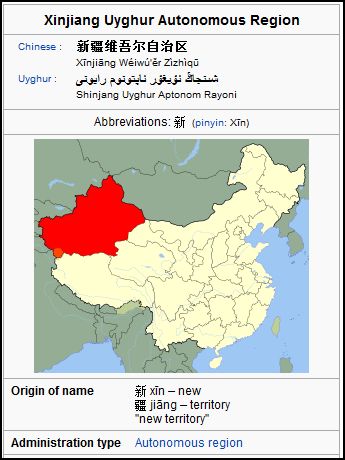
In Part 4 we looked specifically at the physical geographic connection between Pakistan and China - the Karakoram Highway. Coupled with diplomatic maneuvers that may be intended to push international recognition of Jammu and Kashmir as belonging to Pakistan, this could open up a militarily significant land route from China to new port facilities in Gwadar, Pakistan. Should Afghanistan be stabilized by a pro-Pakistani force - such as the Taliban, whom Pakistan helped establish in Afghanistan - both flanks of this road would be protectable by China's large army and air force, allowing Gwadar to be a secure base for Chinese naval forces to project power into the Persian Gulf region. In Part 5 we explored this border issue with India more in-depth. In Part 6 we looked at another border dispute China has with India, and then considered the ramifications should these border issues with India be resolved militarily in favor of Beijing. We also touched on some blowback to Sino-Pakistani relations: the economic impact on Pakistan of cheap Chinese goods, and growing Islamization and related matters in China's Xinjiang Uyghur Autonomous Region.

We now begin with the initial excerpt of China-Iran nuke pipeline by Gordon G. Chang, May 2, 2011:

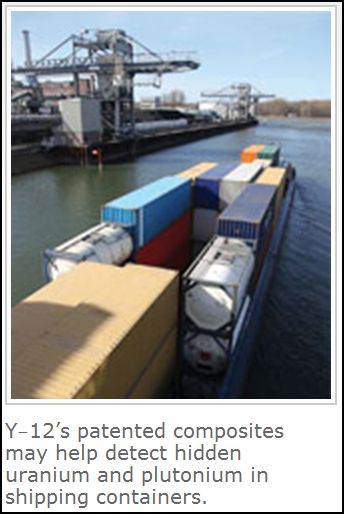
Earlier this year, Malaysian police in Port Klang seized two containers from a ship en route to Iran from China. Authorities suspect that items labeled "Goods Used for Liquid Mixing or Storage for Pharmaceutical or Chemical or Food Industry" were actually parts for nuclear warheads.

With regularity, officials in Asia have confiscated shipments of equipment and materials sold by Chinese state enterprises to Iranian companies in contravention of international treaties and U.N. rules. The United States has yet to convince Beijing to terminate its support for the covert nuclear weapons program of the "atomic ayatollahs" and appears unwilling to impose meaningful sanctions on the Chinese for continuing their trade in the world's most destructive technology.

That trade began in earnest in 1974, when China started to help Pakistan develop an atomic weapon. Later, Dr. A.Q. Khan, the "father of Pakistan's bomb," merchandised China's nuclear technology to rogue states, almost certainly with Beijing's knowledge and perhaps at its direction. China also directly aided Iran.

Chang then goes on to provide a brief yet informative history of Chinese-Iranian connections regarding nuclear weapons proliferation, as well as some quality analysis and questions regarding US policy. Please read the entire article, keeping in mind Chang has been following this topic for some time.

We now consider an article by Chang from over a year ago, entitled Iran Tried to Buy the Pakistani Bomb. What Was China’s Role?, dated March 17, 2010:

Iran tried to buy three nuclear weapons from Pakistan at the end of the 1980s. Islamabad rebuffed the attempt but ended up transferring to Tehran bomb blueprints, centrifuge parts, and a list of black market suppliers of components. So says Dr. Abdul Qadeer Khan, the father of Pakistan's atomic bomb, in an official account revealed on Sunday.

Skipping down:

The significance of Khan's assertions is that they undermine the stout Chinese defense of Iran. First, they highlight long-held Iranian ambitions to build an atomic arsenal.

Second, by detailing how the Pakistani government was involved in nuclear transfers to Iran, Khan raises new questions about Beijing's role. Why? The Pakistani nuclear weapons program is essentially an extension of the Chinese one. China, beginning around 1974, transferred bomb technology to Pakistan. Beijing's assistance was crucial, extensive, and continuous. As Gary Milhollin of the Wisconsin Project on Nuclear Arms Control has noted, "If you subtract China’s help from Pakistan's nuclear program, there is no nuclear program." Moreover, Beijing has remained involved in Islamabad’s nuclear efforts, long after the events Khan so meticulously describes in Sunday's statements.

The continuation of Chinese involvement in the Pakistani program was revealed when Islamabad ended the Khan ring. Due to Chinese pressure, Pervez Musharraf, then the country's strongman leader, conducted a hurried probe, forced Khan's confession, and then immediately pardoned him in 2004 to cut off any disclosures embarrassing to Beijing, which supported the controversial decision to end the inquiry prematurely. Given China's role in the Pakistani nuclear program and its influence in Islamabad, it was not possible for Khan, with official blessing, to transfer Chinese technology to Iran without Beijing's knowledge and consent.

This history goes back decades.


And anyone who has been following this knows this is true (just like anyone with a clue knew Osama bin Laden was in Pakistan somewhere, either along the Durand Line or, more likely, near Rawalpindi or some military facility).

As an example, we consider the first paragraph of Is China Playing a Dual Game in Iran? by John W. Garver, dated Winter, 2011:

One aspect of China's Iran policy suggests a sincere effort to uphold the Nuclear Non-Proliferation Treaty (NPT) regime in cooperation with the United States. Another suggests that Beijing believes a nuclear-armed or nuclear-armed-capable Iran would serve China's geopolitical interests in the Persian Gulf region.1 Is China playing a dual game toward Iran? This question cannot be answered with certainty, but given its importance, a tentative and necessarily somewhat speculative effort to think through the matter is in order.

And, here is an excerpt from near the end of Is China Playing a Dual Game in Iran?:

The circumstantial evidence suggests that China is playing a dual game in Iran. Beijing seeks to convince U.S. leaders that China is a willing and responsible partner in maintaining the NPT regime, but it also helps Iran win the time, international space, and continuing economic wherewithal necessary for it to push its nuclear plans to a successful outcome.

Pakistan offers China technology from weapons bought from the US. (And these weapons are paid for with US taxpayer dollars in the form of military aid; it goes over back home, because we are told that the aid will go to buy weapons made in the US, thus bringing jobs to the districts of elected officials who support it. American voters look at jobs, American officials look at the next election, and Pakistan and China look at how they can improve their position relative to their enemies, mainly us. And don't even try to argue that many Pakistani authorities don't think of the US as a key infidel enemy.) Pakistan also offers a tenuous overland connection to the approaches to the Persian Gulf, and port facilities there.

In return, Pakistan gets nuclear weapons technology from China, which Pakistan can spread to other interested parties - furthering China's goal of building up enemies of the United States, while maintaining deniability plausible enough to keep from suffering consequences.

And let's not forget that China launders money into the campaigns of key politicians in the US, and maintains an excellent espionage network that has key officials on Beijing's payroll. Bill Clinton got caught doing this - and nothing happened. Why should anyone else be afraid? Partisan politics will only push this so far - on the important issues, people from both sides of the aisle are involved in selling America out.

An excerpt from page 6 of China's Use of Perception Management and Strategic Deception, dated November, 2009:

Strategic Deception and Perception Management — A Chinese Perspective

One Chinese description of strategic deception emphasizes its comprehensive nature, broadly targeting an opponent's strategic assessment process about foreign capabilities and intentions.9 This authoritative source for a Chinese military audience indicates that strategic deception has specific battlespace applications, but by its nature deception at the strategic level of warfare is not constrained by the physical space of combat actions. Rather, strategic deception is an ongoing process and covers "all types of measures and activities" designed to confuse an opponent in peacetime or wartime, emphasizing the latter. Confusing the opponent then leads him to make "major errors in judgment and decision-making," since strategic deception aims at foreign intelligence institutions and thus influences the "highest military authorities responsible for formulating strategic decisions."10

Strategic deception in this Chinese conceptualization employs a diversity of methods that merge military with non-military actors and historical with contemporary means:

 Political and diplomatic false actions and conduct
 News media for "deceptive propaganda and false news"
 Electronic measures, such as broadcasting false information and jamming
 Information network deception, especially on the Internet
 Strategic camouflage and fake military targets
 Simulating large-unit activities and strategic demonstration
 Spies and double agents

Sun Tzu's classic admonition to "know your enemy and know yourself" also contributes conceptually to this Chinese definition of strategic deception. Understanding the enemy's psychology and his psychological weaknesses is crucial for deception to achieve the intended effect and to maintain the secrecy of deception activities. China has a long history of employing strategic deception, this definition asserts.11 The continuing development of military technologies is a key factor increasing the means to conduct strategic deception

Works like a champ... especially when you have key people like our steely-nerved Warrior Princess Condoleezza Rice and the Clintons either compromised or on Beijing's payroll.

Sunday, April 24, 2011

Forbidden Knowledge, Forbidden City, Part 2

We pick up where we left off at the end of Part 1, and continue reviewing Google charge highlights China-based hacking by Joe McDonald, dated February 3, 2010:

Companies rarely come forward

Officials in the United States, Germany and Britain say hackers linked to China's military have broken into government and defense systems. But attacks on commercial systems receive less attention because victims rarely come forward, possibly for fear it might erode trust in their businesses.

Google was the exception when it announced Jan. 12 that attacks hit it and at least 20 other companies. Google says it has "conclusive evidence" the attacks came from China but declined to say whether the government was involved.

Google cited the attacks and attempts to snoop on dissidents in announcing that it would stop censoring results on its China-based search engine and leave the country if the government does not loosen restrictions.

Only two other companies have disclosed they were targets in that attack — software maker Adobe Systems Inc. and Rackspace Inc., a Web hosting service.

Mikko Hypponen, chief research officer at Finnish security software maker F-Secure Corp., said his company has detected about two dozen attacks originating from China each month since 2005.

"There must be much more that go completely undetected," he said.

Hypponen said a large British military contractor with which his company worked discovered last year that information had leaked for 18 months from one of its computers to an Internet address in the Chinese territory of Hong Kong. He said similar attacks on military contractors were found in Germany, the Netherlands, Sweden and Finland.

Saydjari said other researchers have told him of dozens of U.S. companies that have been attacked from China but said he could not disclose their names or other details.

Wow!

First of all, the attacks like this one on Google, that are traced back to China, are only the tip of what appears to be a real cyberintelligence iceberg. Second, the fact that China conducts so many cyberattacks lends credence to my suggestion in Part 1 that the PRC may have been behind the attacks first on RSA, then on ORNL.

Continuing:

China's army supports hacker hobbyists

A key source of the skills required might be China's military. China's army supports hacker hobby clubs with as many as 100,000 members to develop a pool of possible recruits, according to Saydjari.

"China has a strategic goal of becoming the world-dominant economic power within this century. Certainly one way to do that faster is to steal industrial secrets," he said.

There are no estimates of losses attributable to hacking traced to China, but antivirus supplier McAfee Inc. says intellectual property worth an estimated $1 trillion was stolen worldwide through the Internet in 2008.

Separately, a Los Angeles law firm says it was hit Jan. 11 by an attack that appeared to originate in China after it filed a lawsuit for CyberSitter LLC, a software maker that accuses the Chinese government of stealing its code for use in a Web-filtering system.

The firm Gipson Hoffman & Pancione said e-mails sent to its lawyers contained malicious software designed to extract information from their computers.

I would say that establishes both motive and opportunity.

'Advanced persistent threat'

Security firm Mandiant Corp. has dubbed such attacks — which allow repeated thefts over months or years — an "advanced persistent threat" and says each one it has studied over the past five years involved theft of information related to U.S.-China corporate acquisitions, negotiations or military acquisitions.

"The scale, operation and logistics of conducting these attacks — against the government, commercial and private sectors — indicates that they're state-sponsored," the company said in a report last month.

But even if an attack is traced to China, experts need to examine the computer used to be sure it was not hijacked by an attacker elsewhere. Consultants say security for many Chinese computers is so poor that they are vulnerable to being taken over and used to hide the source of attacks from elsewhere.

In the Google case, confirming the source would require China's cooperation, and Beijing has yet to respond to U.S. Secretary of State Hillary Rodham Clinton's appeal for an investigation.

"The 'smoking gun' proof is very hard to put together," said Graham Cluley, a researcher for Sophos, a British security software company.

Perhaps China takes advantage of its poor cybersecurity environment as plausible deniability cover for the attacks its intelligence personnel commit?

Regardless, it is a safe bet we will not get that "smoking gun".

China denies government involvement

China's Industry Ministry said in a statement that any suggestion the government is involved in any Internet attack "is groundless and aims to discredit China."

But China is no stranger to government-directed industrial espionage on a vast scale.

Intelligence experts say that since the 1970s, Beijing has carried on a quiet campaign to acquire foreign technology and other secrets by using Chinese businesspeople, students and scientists who travel abroad as part-time spies.

China, with the world's biggest population of Web users at more than 384 million, also has a history of hacking. In 1999, Web surfers defaced U.S. government sites after the mistaken American bombing of Beijing's Belgrade embassy killed three Chinese. Nationalists have attacked Web sites in Japan and Taiwan, the self-ruled island claimed by Beijing as its own territory.

More recent cases have shifted from vandalism to theft of government or trade secrets.

The vast scale, government-directed espionage is far from being just industrial!

Finally:

From vandalism to theft

Last March, a Canadian group, the Information Warfare Monitor, said it found a China-based ring stole sensitive information from thousands of computers worldwide. Targets included the communications network of The Associated Press.

The government did not respond to the report's details but said it opposes computer crime and criticized the researchers for suggesting otherwise.

China has also ordered vendors that sell computer security technology to government agencies to reveal how it works under rules that take effect on May 1. Foreign companies operating there worry that might compromise systems used by banks and others to protect customer information and trade secrets.

Beijing is also pressing foreign financial firms to move more of their computer servers into China. That might require a switch to Chinese-made equipment with weaker protections.

Companies' reluctance to talk about China-based hacking "makes it difficult to make the case for action broadly," Saydjari said. "That might be why Google is parting from that history and sounding the alarm."

Remember, this was a 2010 article. How much progress has China made since then in cyberespionage by requiring vendors to divulge secrets to computer security technology in exchange for China's business?


What might be of interest at ORNL? Perhaps this - 20 petaflops: New supercomputer for Oak Ridge facility to regain speed lead over the Chinese, March 23, 2011:

It was only last October that China's National University of Defense team unveiled the Tianhe-1A, a machine capable of computing at 2.5 petaflops.

"China's National University of Defense team" - is that the connection to the PLA?


Continuing:

The [20 petaflop - 20,000 trillion calculations per second] Titan, built by Cray Computer, will become part of a collection of some of the fastest computers in the world at the ORNL facility, joining NOAA's Gaea, the NSF's Kraken and the DOE's current workhorse, the Jaguar, though new space will have to be found, as the current structure has no room. Plans are in the works for an entirely new facility to be built over the next year, which should fit in well with the delivery date for the first stage of the Titan expected to be by the end of this year, with the second stage slated for sometime next year.


Wow! Petaflops!

Now that sounds exciting... and technology from a computer that works that fast would be worth stealing.

Forbidden Knowledge, Forbidden City, Part 1

We begin with excerpts from Lab halts Web access after cyber attack, April 19, 2011, about a cyber attack on Oak Ridge National Laboratory (ORNL):


OAK RIDGE — A highly sophisticated cyber attack — known as Advanced Persistent Threat [APT] — forced Oak Ridge National Laboratory to shut down all Internet access and email systems over the weekend.

Those restrictions will remain in place until lab officials and others investigating the attack are sure the situation is well controlled and manageable, ORNL Director Thom Mason said Monday [April 18].

[snip]

"In this case, it was initiated with phishing email, which led to the download of some software that took advantage of a 'zero day exploit,' a vulnerability for which there is no patch yet issued," he said. The vulnerability involved Internet Explorer, he said.

[snip]

Mason confirmed that some computers were confiscated and quarantined. He also confirmed that the phishing email messages in this case were disguised as coming from the lab's human resource department.

He said that some lessons learned from the 2007 attack helped lab officials with the current situation, but he said this is a much more advanced attack than the event four years ago.

"Well, if you look at this APT, it is much more sophisticated than what was being used a few years ago," he said. "Certainly what we've seen is very consistent with the RSA attack. ...Whoever is doing this attempts to get a foothold in the network system, works patiently and relatively quietly to try to expand that and is looking for specific types of information."

Director Mason mentions "the RSA attack" - perhaps some background about it might help. RSA At a Glance tells us what RSA is:

Corporate Overview

RSA, The Security Division of EMC, is the premier provider of security, risk and compliance solutions, helping the world's leading organizations succeed by solving their most complex and sensitive security challenges. These challenges include managing organizational risk, safeguarding mobile access and collaboration, proving compliance, and securing virtual and cloud environments.

Combining business-critical controls in identity assurance, data loss prevention, encryption and tokenization, fraud protection and SIEM with industry leading eGRC capabilities and consulting services, RSA brings trust and visibility to millions of user identities, the transactions that they perform and the data that is generated.
In other words, RSA is an industry leader in cyber security.

About the attack on RSA, RSA Executive Chairman Art Coviello had this to say:

Like any large company, EMC experiences and successfully repels multiple cyber attacks on its IT infrastructure every day. Recently, our security systems identified an extremely sophisticated cyber attack in progress being mounted against RSA. We took a variety of aggressive measures against the threat to protect our business and our customers, including further hardening of our IT infrastructure. We also immediately began an extensive investigation of the attack and are working closely with the appropriate authorities.

Our investigation has led us to believe that the attack is in the category of an Advanced Persistent Threat (APT). Our investigation also revealed that the attack resulted in certain information being extracted from RSA's systems. Some of that information is specifically related to RSA's SecurID two-factor authentication products. While at this time we are confident that the information extracted does not enable a successful direct attack on any of our RSA SecurID customers, this information could potentially be used to reduce the effectiveness of a current two-factor authentication implementation as part of a broader attack. We are very actively communicating this situation to RSA customers and providing immediate steps for them to take to strengthen their SecurID implementations.

So, an APT attack hits a cyber security industry leader. For more background, we consider Hacker Spies Hit Security Firm RSA, dated March 17, 2011, by Kim Zetter:

The company said in a note posted on its website that the intruders succeeded in stealing information related to the company’s SecurID two-factor authentication products. SecurID adds an extra layer of protection to a login process by requiring users to enter a secret code number displayed on a keyfob, or in software, in addition to their password. The number is cryptographically generated and changes every 30 seconds.

So, the attackers sought information about a complex cyber security system where the right person has to be at the right computer, and with the right controlled cryptographic device, to be able to log on.


ORNL has plenty of activities that would warrant that level of security.


Skipping down in Hacker Spies Hit Security Firm RSA:

RSA categorized the attack as an advanced persistent threat, or APT. APT attacks are distinctive in the kinds of data the attackers target. Unlike most intrusions that go after financial and identity data, APT attacks tend to go after source code and other intellectual property and often involve extensive work to map a company's infrastructure.

APT attacks often use zero-day vulnerabilities to breach a company and are therefore rarely detected by antivirus and intrusion programs. The intrusions are known for grabbing a foothold into a company's network, sometimes for years, even after a company has discovered them and taken corrective measures.

Last year's hack into Google was considered an APT attack, and, like many intrusions in this category, was linked to China.

So, this is an advanced persistent threat.

Depending on whose article you read, an APT might just be a miscellaneous category for anything the IT firm doesn't know how to deal with.

But, when a major IT company like Google gets hit, then a year later an industry leader in cyber security gets hit, and they're calling it an APT, that makes me suspect it is something serious.

It seems the RSA attack was after the source code that would allow the hacker access to ORNL's data.

Did the hacker succeed, and via the APT phishing get information from one of ORNL's many critical programs?

Regarding the Google attack, we get some background from Google charge highlights China-based hacking by Joe McDonald, dated February 3, 2010:

BEIJING — Google's accusation that its e-mail accounts were hacked from China landed like a bombshell because it cast light on a problem that few companies will discuss: the pervasive threat from China-based cyberattacks.

The hacking that angered Google Inc. and hit dozens of other businesses adds to growing concern that China is a center for a global explosion of Internet crimes, part of a rash of attacks aimed at a wide array of targets, from a British military contractor to banks and chemical companies to a California software maker.

The government denies it is involved. But experts say the highly skilled attacks suggest the military, which is a leader in cyberwarfare research, or other government agencies might be breaking into computers to steal technology and trade secrets to help state companies.

"Chinese hacking activity is significant in quantity and quality," said Sami Saydjari, president of the consulting firm Cyber Defense Agency and a former U.S. National Security Agency official.

I don't see that anyone has publicly accused China of being behind the APT attacks on RSA and ORNL, but it sure seems to me that might have been the case.


As I dig, I find the trail leads from these major advanced persistent threat cyberattacks on key US-based targets to cyberintelligence officers of Communist China's People's Liberation Army (PLA). From there, a trail leads back to PLA front companies in the United States. From there, via the front companies' associated political action committees (PACs), a trail leads via campaign contributions to important US politicians. And, these PLA front companies are not the only hosts for Communist Chinese intelligence operations in the US - which have been ongoing and enjoying success for decades.


More to follow.

Thursday, March 17, 2011

Desiccated Land, Part 2

In this post, we try to put the Jammu and Kashmir situation into perspective. You may wish to review Part 1.


First, a brief update on some news from the region.

We begin with an initial excerpt from 24 hour gun-battle leaves 2 ultras dead, trooper injured, dated March 14, 2011, which outlines an incident in the town of Sopore, in the district of Baramulla (the English is a little choppy):

SRINAGAR, Mar 13: In a 24 hour long gun battle in Sopore that ended this morning police claimed to have killed two militants, including a top Harkat-ul-Mujahideen (HuM) commander while an army trooper was injured. Suspected militants also hurled a grenade in area.

According to police, Wasim Ahmad Ganai a local militant of HuM who was holed up in Kralteng locality of Sopore town was killed in the fresh exchange of fire with a joint team of 22 Rashtriya Rifles and Special Operations Group (SOG) this morning. A trooper identified as Nitender Kumar of 22 Rashtriya Rifles was injured in exchange of heavy fire.

Police said that Wasim gave a stiff resistance to police and army and kept them engaged during last night in gunfight that ended this morning. The encounter started Saturday after troopers of 22 RR, SOG and CRPF cordoned off the private clinic of Dr Sofi Muhammad Ramzan.

As search party entered heavily armed militants opened fire on police and army triggering a fierce encounter. In the initial exchange of fire, police claimed the killing of divisional commander of Harkat-ul-Mujahideen (HuM) Chhota Kalimullah alias Shamsher alias Talwar Bhai and Wasim managed to take shelter in drain and engaged the forces in 24-hour long gun-battle.

In the aftermath of the fight, security forces seized a "large" cache of weapons and ammunition.

It should be noted that Sopore was the scene of a 1993 event known as the Sopore Massacre, described in an article in Time thusly:

PERHAPS THERE IS A SPECIAL CORNER IN HELL reserved for soldiers who fire their weapons indiscriminately into a crowd of unarmed civilians. That, at least, must have been the hope of every resident who defied an army-enforced curfew in the Kashmiri town of Sopore last Thursday to protest a massacre that left 55 people dead and scores injured. It was India's latest blow in a three-year campaign to crush the predominantly Muslim state's bid for independence. In retaliation for the killing of one soldier, paramilitary forces rampaged through Sopore's market setting buildings ablaze and shooting bystanders. The Indian government pronounced the event "unfortunate" and claimed that an ammunition dump had been hit by gunfire, setting off fires that killed most of the victims.

In that incident, hundreds of buildings were destroyed; how many hundreds, and how they were destroyed, depends on who is asked.


This most recent incident is given some perspective, as we consider the first part of Rise in militancy related incidents, also dated March 14, 2011:

SRINAGAR, Mar 13: With the onset of spring the militant relatives incidents seem to be increasing in valley and in less than a week seven militants were killed in Srinagar, Shopian and Sopore. Police claim that around 100 militants are active in North and Central Kashmir.

The highest number of militants, police claim, are active in the apple rich Sopore town of North Kashmir. "The number of active militants in Sopore and Rafiabad is around 20-25," deputy inspector general of police North Kashmir Muneer Ahmad Khan told Kashmir Times. "We have groups of militants active in Rajwarad, Hafrudda Handwara and Lolab area in Kupwara. There is also a group of militants active in Bandipora district," he added.

The article goes on to explain some controversy over how a militancy-free zone was declared, though the officials in the zone don't know who declared it; but, they point out that in that particular zone, militancy is down. This is temporary, though, as the militants move around from region to region, and many of them infiltrate in from Pakistan. However, we are reassured, alert troops are watching the Pakistan border to minimize this.

A general alarm is sounded in an article entitled Target India: 700 militants waiting at Pak launchpads, dated March 17, 2011:

Pattan (J&K) Noting that turbulence in Afghanistan and Pakistan will have an impact on the situation in Jammu and Kashmir, Indian Army on Thursday said 700 militants were waiting at various lauchpads to infiltrate into the state.

"India, Kashmir and Pakistan are all at the peripheries of the problem area of Afghanistan. So if peace does not exist in Afghanistan and there is turbulence in Pakistan, obviously there will be turbulence around us," General Officer Command (GOC) of Srinagar-based 15 Corps Lt General S A Hasnain told reporters here, 30 kms from capital Srinagar.

Lt Gen Hasnain was replying to a question about the impact on Kashmir after the US forces withdraw from Afghanistan.

"The problem is always that of turbulence. An area that is turbulent will always send waves of turbulence into the other areas," he said.

He said the Army has reports that militants across the Line of Control (LoC) will attempt to infiltrate into the state in the next few days.

So, there is immediate concern about further violence in Jammu and Kashmir, but in the long term, there is concern about how that situation could deteriorate if the US withdraws from Afghanistan without adequately stabilizing the situation there.

Of course, it is an oversimplification of the problem to point at Afghanistan. Instability there in the wake of the Soviet withdrawal in 1989 was dealt with by Pakistan via proxy forces from across the Durand Line; we now call these forces the Taliban, but they are the same kinds of militants that infiltrate into Jammu and Kashmir.

But, to blame it all on Pakistan is also an oversimplification; were there not a volatile situation in Afghanistan and J & K, the "stabilizing" influence of Pakistani-supported militants would not be so profound.

For me, it is interesting to view the whole situation in a broader context.

To a recent article entitled China's arms sales to Pakistan unsettling South Asian security, I made the following comment:

China's strategic partnership with Pakistan serves China far more than it serves Pakistan.

If China needed to do so, it could move its powerful ground forces, supported by aircover, overland to defend the port facilities in Gwadar. Such inland lines of communication would be challenging even for the US to interdict. The trick would be getting Chinese naval units all the way around Southeast Asia and India to Gwadar.

Far more likely, though, is that the build-up of Pakistani power is intended to offset US influence in Pakistan, and to keep India otherwise occupied, allowing a freer hand for Beijing throughout the rest of Asia.

Pakistan needs to rethink its adversarial relationship with India. By defining itself as a Muslim country, juxtaposed against India, and by support of Islamic militants as proxies and for strategic depth, Islamabad has painted itself into a corner, where Pakistan's policy can easily be manipulated by Washington (though the US does not have the finesse to do so) and especially by Beijing. If Pakistan could reinvent its relationship with India, Islamabad would have a far freer hand in its foreign affairs, defense and other matters, and Pakistanis would benefit by less blowback from ISI's upport of militants.

For background, I suggest my Tale of a Tiger series (Part 1, Part 2, Part 3, Part 4, Part 5, Part 6), which paints a picture of growing Chinese influence in South Asia and the Persian Gulf, a drive towards a capability to challenge US naval power, a growing ability to project naval power into the Indian Ocean, and which addresses Sino-Indian issues. Furthermore, in Part 6, I point out the advantages of a Chinese strategic move into South Asia, which would help stabilize Xinjiang, a region where China is currently dealing with its own Islamic militants.

China's arms sales to Pakistan unsettling South Asian security details how China has benefited from arms sales to Pakistan; one benefit is a big, reliable foreign customer, allowing for development of China's arms industry.

However, China is not the only competitor nation to be building its arms industry.

An article from March 4, 2011, entitled US air power: Made in India? addresses how India's aerospace industry is growing in part due to a policy of "offsets". Basically, India agrees to purchase aircraft from the US, provided the aircraft are built at least partially in India.

The benefit to the US corporations is that manufacturing can be done in India, rather than in the US, where labor costs are higher.

This means Americans lose jobs so Indians can have them.

But, a big benefit to India is that the manufacturing facilities are in India, not the US.

In a hypothetical scenario where relations between the US and India deteriorated to the point of war (obviously, extremely unlikely), India would have the industrial base to support the war; an industrial base that belongs in the US, but which was exported for profit by US corporations.

But wait, there's more!

India hopes to qualitatively improve its aerospace industry through the technology transfer that would naturally accompany coproduction of late-model US combat aircraft.

On the US side, it is assumed that by the time India learns the ins and outs of the aircraft it is coproducing, the US will have fielded a newer generation.

(I'll bet that, when you began reading this article about militants in some Indian town that few Americans have ever heard of, you never suspected this article would turn in the direction it has!)

For India, this is a big plus, because India's aerospace industry is growing quantitatively and qualitatively, placing it well ahead of Pakistan's, and on a par with China's; this, in part, at American expense, just as China's military-industrial complex is developing in part at Pakistani expense.

(Of course, when you consider how much money the US government is giving to Pakistan, I could argue that China's development is also at US expense.)

In the long run, this will leave India in a much better position vis-à-vis both Pakistan and China for a fight with both that could be sparked by an incident in some town like Sopore.


But, my American readers may be asking, where will that leave US?

;)

Saturday, January 1, 2011

Tale of a Tiger, Part 6

Picking up where we left off at the end of Part 5, business between China and India may be on the upswing, but border issues remain border issues. From India, China shake hands on trade, but border disputes prove intractable, December 16, 2010:

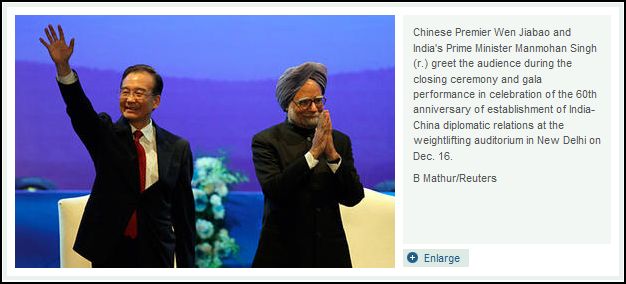
India and China sealed $16 billion worth of trade deals during Chinese Premier Wen Jiabao's visit to New Delhi, but many of the sore points between the Asian giants were left to future diplomacy to sort out.

Perhaps most alarming to analysts are the two countries' longstanding border disputes, which have proven intractable and contributed to wider Asian nervousness about China.

While Mr. Wen and Indian Prime Minister Manmohan Singh pledged to resolve such disputes "at an early date," and also agreed to set up an emergency hotline and hold more frequent high-level visits, some analysts are concerned that the continued failure to resolve the border standoff has created an atmosphere of mistrust and military wariness in the region.

"It's 29 years of negotiations on the border with nothing to show because the Chinese have been taking India around the mulberry tree, they commit to something and reinterpret it later," says Brahma Chellaney, a Sino-India expert at the Center for Policy Research, an independent think tank in New Delhi. "The talks are deadlocked now."

The two countries fought a brief border war in 1962. The ceasefire left China in control of a Switzerland-sized area known as Aksai Chin that India still claims, while the Indians have held on to Arunachal Pradesh, a territory the size of Austria claimed by the Chinese.


Arunachal Pradesh - this is the area mentioned in Part 5; from China/India Border Disputes: Arunachal Pradesh, India or South Tibet, April 14, 2009:

Apr. 14 – With yesterday's news that China has vetoed plans for an Asian Development Bank loan to India for development of the Arunachal Pradesh region, we take a look at why the region is disputed, where it is, and the commodities and economic benefits possession of the area brings.

The political problems with the region go back to the days of the British Raj, and predate the current government of China's authority. Indeed, Taiwan claims ownership also under its position as an alleged government of China. Historically, the region was a kingdom, with several mentions of it being made in a number of Vedic texts. It is also mentioned in the Indian epic, the Mahabharata, although it is usually acknowledged that much of the region was a de facto vassal state of Tibet, and that tributes were paid to the Dalai Lama in Lhasa.

Parts of the region however are known to have been administered by Bhutan, and to the east, Burma, until the British annexed India completely in 1858. The region was an important trading route with Lhasa, and connected Tibet to the nearest port, at Calcutta. The sixth Dalai Lama was born in Tawang, in the northwest of the region.

Problems over sovereignty go back therefore to the Chinese claim over Tibet, which was enforced in 1949, and to the "Simla Accord", of 1914, when China was ruled as a republic, in which representatives of Britain, China, and Tibet were to define the borders. The purpose of the agreement was to designate borders of Inner and Outer Tibet, in addition to borders between Tibet and British India. An 890 kilometer-line was designated as the border. British and Tibetan officials agreed on the demarcation; however the Chinese had issues with the designation of “inner” and “outer” Tibet, and walked out of the discussions. Fast forward to the Chinese civil war, and the Nationalists fleeing to Taiwan, and the Communist Party’s moving into Tibet in 1951. Since then, the Chinese government has made it clear that its position has remained constant, and that it inherited the Nationalist position that the agreement over the borders in 1914 was never agreed to by China. It subsequently has refused to do so, and in 1962 fought a brief border war with India over the territory. China won, but subsequently withdrew from its territorial gains in the region and allowed India to repossess them.

China and Taiwan accordingly jointly claim Arunachal Pradesh as belonging to Tibet and being the province of "South Tibet" as neither signed off on the original border demarcation. India claimed the area as under its sovereignty in 1950, while the Tibetan government in exile continues to identify Arunachal Pradesh as belonging to India and recognizes the Simla Accord and border demarcation between Tibet and India.

Arunachal Pradesh is agriculturally rich, with rice, maize, millet, wheat, pulses, sugarcane, ginger and oil seeds all grown in the region and processed here. The region also has some 61,000 square kilometers of forests, and this represents an important sector of the local economy, however tree felling and saw mills are prohibited on conservation grounds. It is understood part of the disputed loan India was to obtain from the ADB was to deal with water management and ecological problems caused by deforestation on the Chinese side and impacting on Arunachal Pradesh. Limited trade with Tibet has commenced, with roads having been constructed by China up to various borders crossings up to the border, with routes leading back to Lhasa. However, the Indian side remains distrustful of Chinese intentions in the region, and similar infrastructure on the Indian side remains downgraded.

Returning now to India, China shake hands on trade, but border disputes prove intractable, December 16, 2010:

Indian history of the border dispute has tended to cast China as an aggressor, with Beijing launching a surprise military incursion.

A new book by Indian lawyer A.G. Noorani suggests that in the years running up to 1962, India’s first Prime Minister Jawaharlal Nehru contributed to the eventual standoff. Mr. Nehru drew border lines unilaterally in areas with undefined borders, and then ordered old maps to be destroyed. In 1960, China offered to settle the borders but India did not see a deal through, claims Mr. Noorani.

[snip]

Dr. Chellaney disputes that the Chinese were in the mood to settle in 1960 – or at any other point.

"The fact is the Chinese have never put forward a concrete proposal," says Chellaney. "You can’t talk about missed opportunities when nothing has been put on the table."

Indian and Chinese negotiators have met 15 times since 2003 and an additional 25 times since 1981, he says, arguing that it’s a deadlock that should concern the wider world.

I concur that this is a deadlock that should concern the wider world.

If Beijing can get what Beijing wants through diplomacy, why resort to war? But, the Communist Chinese are hardly pacifists, and neither do they tolerate a great deal of anti-government dissent; consequently, when they decide to hedge their diplomatic bet by preparing and positioning military capabilities, we can't expect this to be stopped by by some Chinese president elected on a platform of "change", nor can we expect a flood of protesters in Tiananmen Square to turn the tide.

"This border dispute has the potential of creating not only bilateral military conflict but a conflict that involves other military powers," says Chellaney. "This dispute includes not just land but water issues which is central to the future of Asia."

Specifically, should China fight a war with India, and win a decisive military victory, the ramifications for Taiwan are clear: settle the border dispute (in other words, submit to Beijing's authority) or else; and don't expect South Korea, Japan and the United States to save you.

From there, it would be easy to establish dominion over the rest of East Asia, and, that done, China's unruly neighbor to the south, Vietnam, would be in an awkward position to push any claims on the Spratly Islands, or do much else, for that matter.

I do not believe that the current regime in Beijing is actually planning to do this; again, why risk so much on such a roll of the military dice, when diplomacy works? But, the capability is being put into place, and who knows when the international situation - or a change in power in Beijing - will change China's foreign policy calculus?


It is not just Early Light that questions China's motives and the utility of China's Pakistan alliance to Islamabad.


From A convenient alliance?, by Nadir Hassan, December 20, 2010:

To invert Ayub Khan's phrasing, it is Pakistan's lot in life to have allies who are masters, not friends. Pakistan joined 17 other countries in refusing to attend the Nobel Peace Prize awards ceremony for jailed Chinese dissident Liu Xiaobao last week. As expressions of solidarity go, this was purely a symbolic one; our absence was barely remarked on both here and abroad. Leaving aside the human rights question, a topic on which Pakistan can speak with as much moral authority as Bill Clinton can on fidelity, it may be time to ask if our alliance with (or servitude to) China is serving our national interest.

Hassan's frank assessment of Pakistan's human rights record, and his brutally accurate reference to Clinton's scandals, go a long way toward establishing Hassan's credibility! :)

The umbilical cord that chains Pakistan to China is a mutual suspicion of India. In guarding against real and imagined Indian designs, Pakistan even negotiated away part of Kashmir that it had earlier staked a claim to in the Sino-Pakistan Agreement of 1953. The China-Pakistan alliance made sense during the Cold War, when India had allied itself to China's Communist rival, the Soviet Union. China needed us to put a spanner in India's ambitions whenever possible while we sought an ally that would, unlike the US, reliably deliver military aid whenever we were at war with our eastern enemy. This was an alliance based on convenience not ideology, and out of it arose incidental benefits like the construction of the Karakoram Highway and bilateral trade.

There is evidence that the closeness of the alliance may now be an anachronism. As long as we hew to our traditional anti-India stance, we will always need China to keep Indian ambitions in check. China, though, may not need as close a relationship with Pakistan for much longer. Bilateral trade between China and India is now close to $50 billion, up from below $150 million just 25 years ago. The former – and likely future – rivals are also cooperating on energy and civilian nuclear projects. For the moment, China is concentrating on building its economic strength rather than projecting military might. In that situation, Pakistan is sure to lose out.

Certain elements in Islamabad - those who support militarized madrassas and an endless supply of jihadis along the Afghan border to provide strategic depth and proxies as a counterweight to India - would probably also view the China alliance as important to their interests.

But, beyond that, Pakistan's alliance with China is a bit anachronistic - to Pakistan, but not to China.

While we have significant trade activity with China ourselves, we also need to reconsider its value. Our manufacturing industry is unable to compete in terms of price and quality with China. Despite this, Chinese manufacturers are granted trade benefits, which is leading to the closure of similar small-scale industries in Pakistan. Add to that the massive trade deficit Pakistan has with China and it is reasonable to ask if we couldn’t find a more complementary trading partner – India perhaps, where we could export agricultural products while importing from them the same items we currently get from China.

I am sad for Pakistan to see that Pakistanis are suffering economically due to competition from Chinese manufactured goods. This is also an issue for the world, as more economic opportunity in Pakistan might mean fewer people with time and motivation to listen to extremist militant viewpoints being propagated in some of the madrassas.

It does, however, confirm what I know about the US economy - this "free trade" bill of goods that we have been sold is not in the best interests of the American people, any more than a similar policy is helping Pakistan; how can workers in either country compete with what has been described as slave labor in China, which is working with minimal (to say the least) environmental regulation?

The rise of Islamic militancy has also forced China, which has a restive population of Uighur Muslims who get training in Muslim countries, especially Pakistan, to seek out alliances with traditional foes like Russia. Even if Pakistan starts cracking down further on militancy, China is unlikely to give us the same importance as emerging countries like Russia.

Trouble in China's Xinjiang Uyghur Autonomous Region (XUAR) has indeed been tied to general Islamic militancy in South Asia, and the heroin trade from Afghanistan plays a role, as well - the source of much of this just a drive down the new-and-improved Karakoram Highway!


A military situation that requires China to move troops into Pakistan would help gain control of the XUAR, as well as give China significant leverage and ability to deal with the source of some of the troubles there.

This is not to argue that Pakistan should abandon its partnership with China. We simply need to diversify our diplomacy. Our reliance on China right now is such that any diplomatic dust-ups will have profound effects on us. And the next time a jailed dissident is honoured, we may even show up.

Pakistan may find itself maneuvered into a war with India to support Chinese interests.

More to follow.